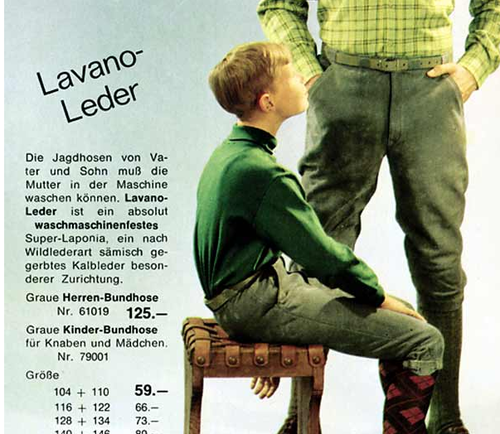
“Lavano-Leder” is splashed across the page in bold type, promising a miracle material that looks like leather yet can apparently survive a trip through the wash—an irresistible claim in the era when catalogs sold modern life one gadget and fabric at a time. The ad copy (in German) leans hard on practicality and ruggedness, tying the product to hunting gear and “Super-Laponia” toughness, while the layout keeps the pitch clean and confident. Even without a stated date or brand name, the sales language feels familiar: innovation, durability, and a little bit of glamour packaged as everyday necessity.
On the right, the staged domestic tableau does most of the storytelling, with a boy perched on a small stool looking up at an adult in sturdy trousers, the two figures cropped to emphasize legs, posture, and fabric. The pose reads as wholesome “father-and-son” outfitting—yet the composition also invites a second glance, because it’s oddly intimate for a clothing listing. That gentle tension between innocent family marketing and a slightly suggestive visual rhythm is exactly the kind of double meaning that makes old-school ads and catalog pages so entertaining to revisit.
Collectors and pop-culture historians love pieces like this because they reveal how humor can be accidental, born from design choices that seemed perfectly normal to the original audience. Here, the product description insists on washable “leather,” the pricing and item numbers sit dutifully at the bottom, and the models’ cropped bodies turn the whole thing into a cheeky wink for modern viewers. If you’re exploring surprising double meanings hidden in vintage ads, comics, and catalogs, this “Lavano-Leder” page is a reminder that time doesn’t just change language—it changes what we notice and why we laugh.