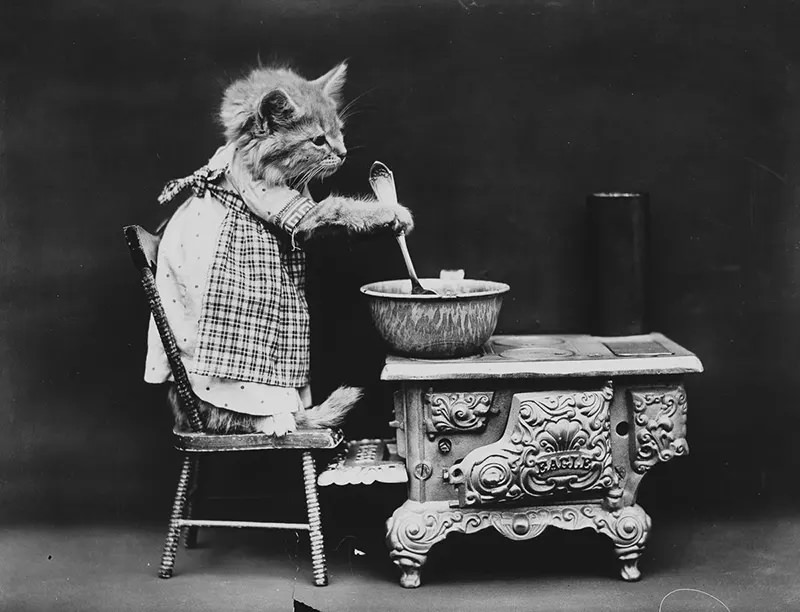
Perched on a little chair in a checked apron, an unexpectedly serious kitchen worker gets down to business: a fluffy cat stands at a stove, paw on a spoon, stirring a bowl as if dinner depends on it. The set is delightfully theatrical, with the animal dressed like a tiny cook and posed to mimic human routine, turning a simple gag into a carefully staged scene. Even without a caption, the humor lands immediately—deadpan concentration meets absurd circumstance.
To the right sits an ornate cast-iron range, its decorative panels and raised details giving the whole composition a homely, old-fashioned character. A mixing bowl rests on the stovetop while the dark, uncluttered backdrop keeps attention on the gesture of stirring and the costume’s crisp pattern. Details like the kerchief-style apron tie and the spoon’s angle suggest a photographer intent on making the illusion convincing, not merely cute.
Titled “The Cook,” this historical photo fits neatly into the long tradition of comic studio portraits and novelty animal imagery that once circulated as prints and postcards. It’s funny, yes, but it also hints at how earlier audiences enjoyed staged domestic scenes—miniature props, exaggerated roles, and a wink at everyday labor. For collectors and readers searching for vintage humor, antique kitchen ephemera, or quirky animal photography, it’s a charming reminder that playful visual storytelling has deep roots.