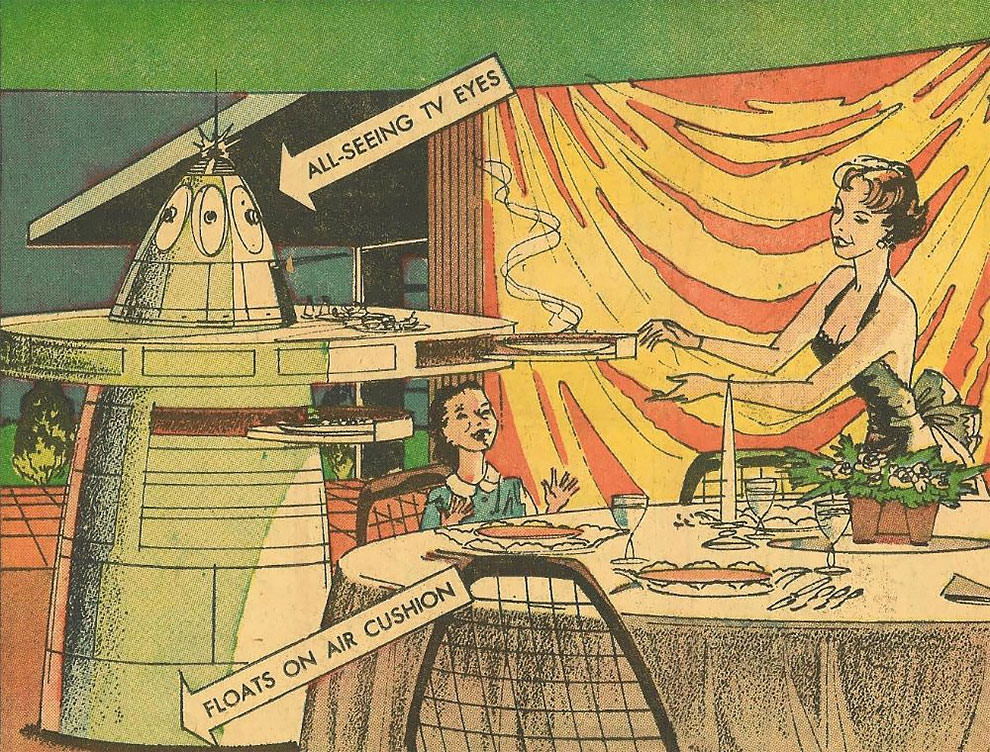
A rocket-shaped household helper glides into the dining area, “FLOATS ON AIR CUSHION” proudly stamped beside it like a sales pitch from the future. Its cone top is dotted with “ALL SEEING TV EYES,” turning the machine into a rolling lookout as much as a servant. At the table, a woman leans forward with the calm confidence of someone who’s been promised effortless modern living, while a child looks on, half curious and half cautious.
The humor of “Robot Butlers” comes from how ordinary the scene remains despite the outlandish technology: neatly arranged plates, tall candles, and stemware set for a proper meal. Instead of a clanking metal man, the era’s imagination offers a hovering appliance—part kitchen cart, part surveillance gadget—designed to deliver comfort with a side of spectacle. The bright, theatrical drapery in the background heightens the sense that domestic life has become a stage for futuristic consumer dreams.
As a piece of retro futurism, the illustration reveals what people once wanted from home automation: service, speed, and a bit of magic, all wrapped in reassuring mid-century style. It’s also a reminder that early visions of smart homes often mixed convenience with watchfulness, long before webcams and voice assistants became mundane. For anyone searching for vintage tech art, classic futurist advertising, or the history of imagined robots in everyday life, this playful scene lands its joke with surprising bite.