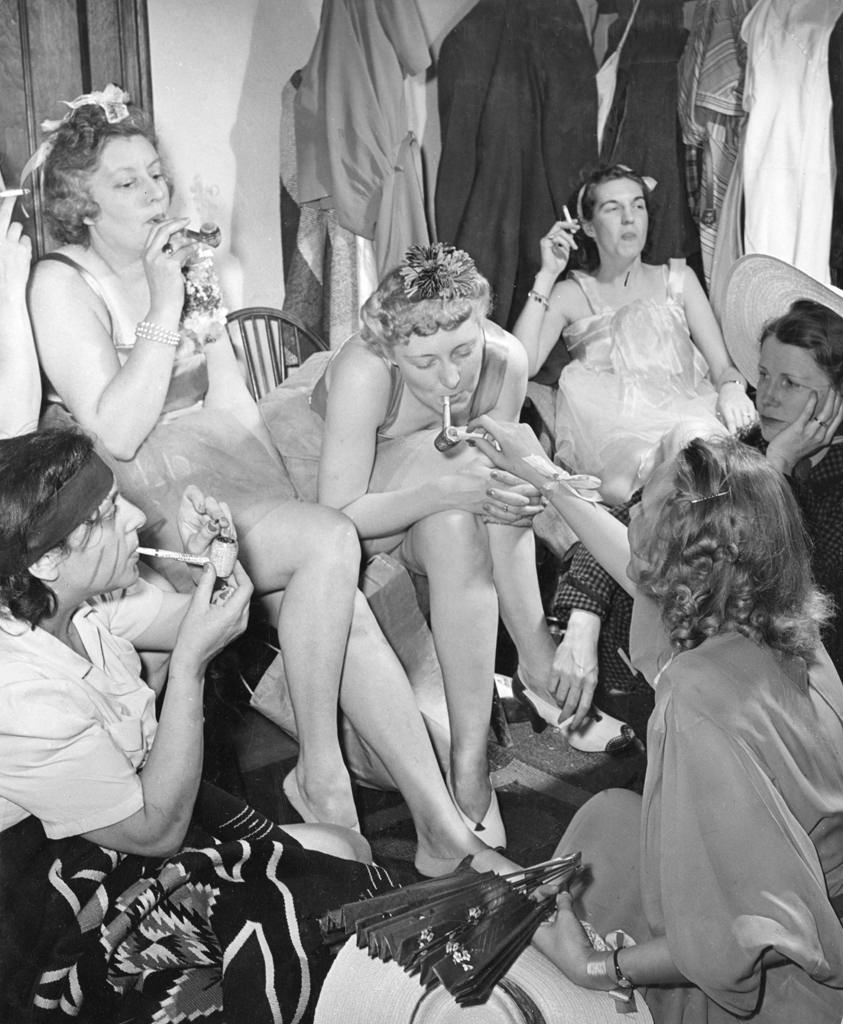
Laughter and cigarette smoke mingle in a cramped backstage-like room where several women lounge close together, dressed up for the occasion and leaning into the joke of it all. One balances a pipe with theatrical seriousness while another reaches in to light it, turning a traditionally male “smoker” into a playful bit of role reversal. Coats hang on the wall behind them, and the tight quarters make the scene feel candid, as if the photographer walked in at exactly the right moment.
The title places this gathering among GOP women in Connecticut in 1941, and the humor lands because the props and poses mimic an old-fashioned club ritual. Instead of stiff formality, the mood here is conspiratorial and relaxed—half social call, half performance, with hats, curls, and party dresses sharing space with pipes and cigarettes. It’s a small snapshot of how political organizing could also be community theater, where camaraderie mattered as much as speeches.
Seen today, the photograph works on multiple levels: a funny period moment, a peek at women’s political culture on the eve of America’s wartime shift, and a reminder that campaigns have always relied on social networks. Details like the crowded seating, the quick hand offering a light, and the unfussy, caught-in-the-act expressions give it the texture of real life rather than a posed publicity shot. For anyone searching mid-century Americana, women in politics history, or Connecticut political ephemera, this 1941 “smoker” is as revealing as it is entertaining.