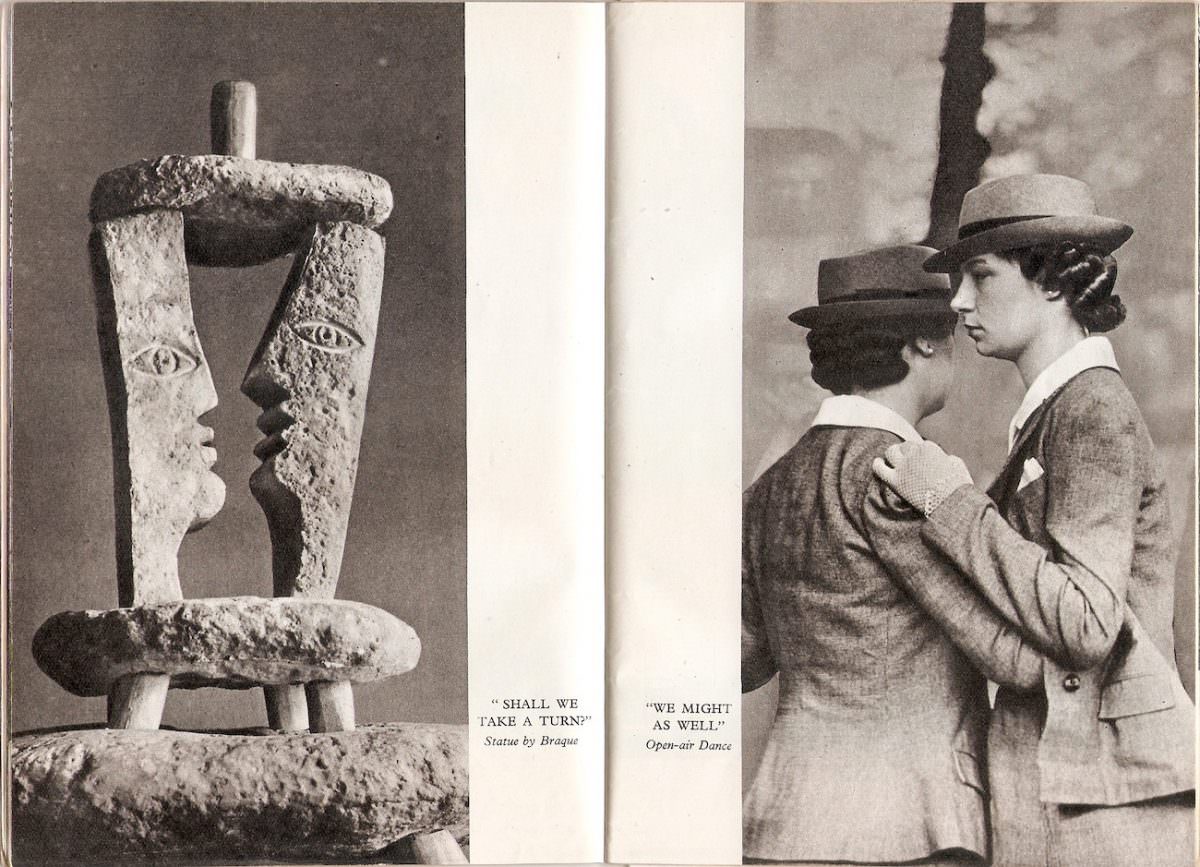
A playful dialogue runs through this paired composition: on the left, a modernist sculpture attributed to Braque stacks rough-hewn forms into a chair-like frame, with two stylized faces turned toward one another, their carved eyes fixed in a perpetual near-meeting. The stone surface reads as porous and weathered, while the geometry feels deliberate, like a visual pun on conversation and courtship. Even the captioned line—“Shall we take a turn?”—leans into that sense of flirtation, turning abstract art into a social scene.
Across the gutter, the mood shifts from carved stone to living bodies as two smartly dressed dancers hold a close, measured embrace in an outdoor setting. Their hats, tailored jackets, and composed expressions suggest a public occasion where style mattered as much as the steps, and the background blur hints at trees or a park-like space rather than a formal ballroom. The printed reply—“We might as well”—reads like a quiet punchline, as if the dance answers the sculpture’s invitation.
Together, “Statue by Braque (and) Open-air Dance” works as a small time capsule of early modern taste: avant-garde art paired with everyday leisure, abstraction set beside social ritual. For readers interested in vintage photography, art history, and the culture of public dancing, this image offers a neat contrast between the enduring stillness of sculpture and the fleeting intimacy of movement. The humor is gentle but pointed, reminding us how often exhibitions, magazines, and photo spreads used witty juxtapositions to make modern art feel approachable.