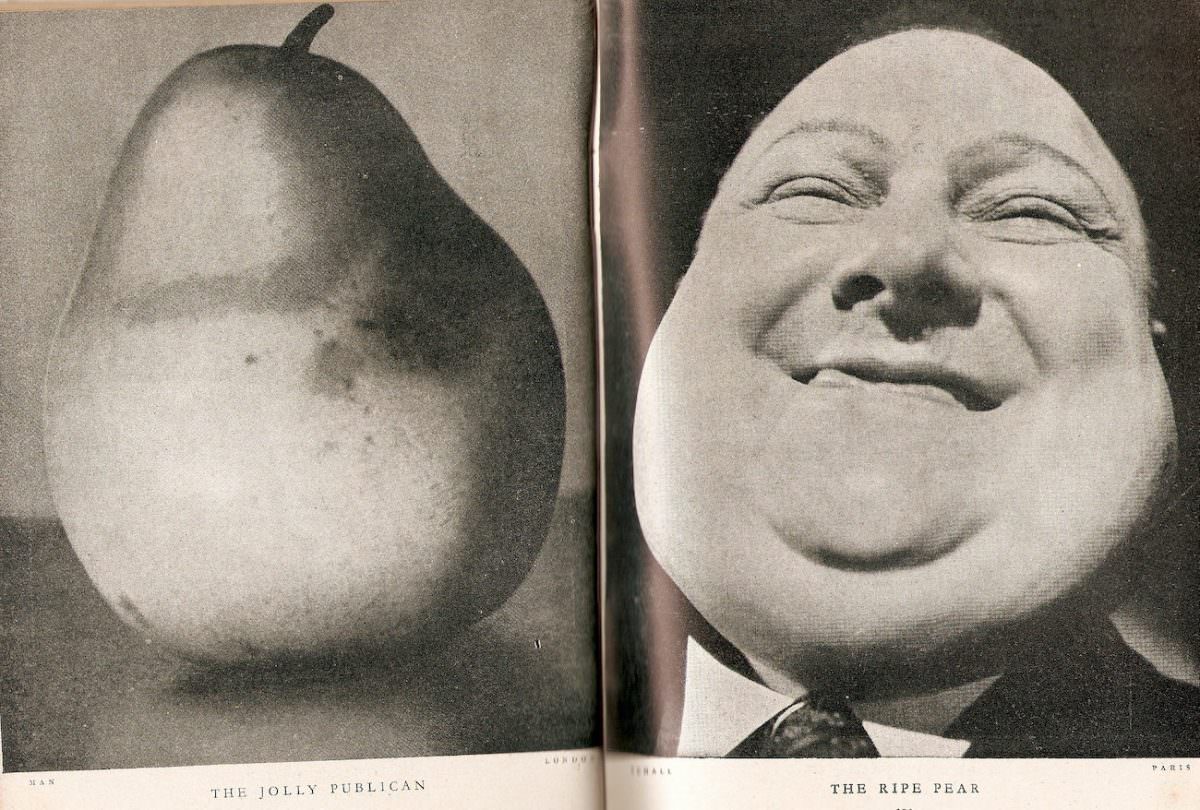
A bulbous pear fills the left page like a still-life study, its skin softly mottled and shaded so that the fruit feels almost sculptural. Opposite it, a man’s face is framed and lit in a way that exaggerates round cheeks and a broad, delighted grin, turning a candid moment into visual comedy. The pairing immediately explains the title, “The jolly publican (and) The ripe pear,” inviting the viewer to compare shapes, textures, and expressions across the spread.
What makes this historical photo so appealing is its playful use of juxtaposition: the quiet ordinariness of fruit against the exuberance of a human smile. The close crop and high contrast push both subjects toward caricature without needing any caption beyond those printed beneath. Even without a clear date or location, the layout suggests a period when humorous photographic comparisons and printed spreads were popular, blending everyday observation with a wink to the audience.
For readers interested in vintage humor, social history, or the evolution of photo-based storytelling, this post offers a small but memorable example. The “publican” in the title hints at pub culture and conviviality, while the “ripe pear” becomes a visual punchline rather than a prop. It’s a reminder that historical images don’t always document grand events—sometimes they preserve the simple pleasure of a joke shared across a printed page.