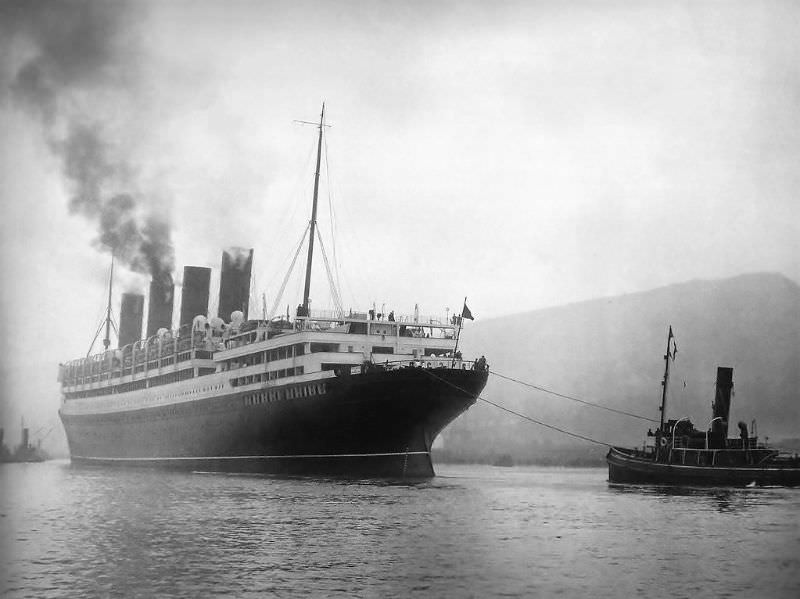
Aquitania glides down the River Clyde with the poised confidence of a brand-new ocean liner, her towering funnels sending a dark plume into the pale sky as she begins sea trials on 10 May 1914. The ship’s long, stepped decks and crisp rows of portholes emphasize just how enormous she is, while figures gathered along the rails hint at the pride and curiosity that always accompanied a first run. In the distance, the soft outline of hills frames the waterway that served as a proving ground for some of the era’s most ambitious passenger ships.
Off her side, a smaller tug works close by, a reminder that even giants relied on practical river craft to guide them through narrower reaches and shifting currents. The tow line draws the eye across the surface of the Clyde, adding a sense of motion and coordination as Aquitania is eased into deeper water and higher speed. Smoke, steam, and the clean geometry of hull and superstructure combine into a classic scene of early 20th-century maritime engineering.
Sea trials were the critical moment when design met reality, testing handling, power, and reliability before a liner could be trusted with long-distance service. That context gives this photograph more than scenic appeal: it captures a turning point in the story of transatlantic travel, when shipbuilders pushed scale and comfort forward through innovation and hard-won experience. For readers searching for Aquitania history, Clyde shipbuilding, or Edwardian-era ocean liners, this image offers a vivid window into the world that launched one of the great ships of her age.