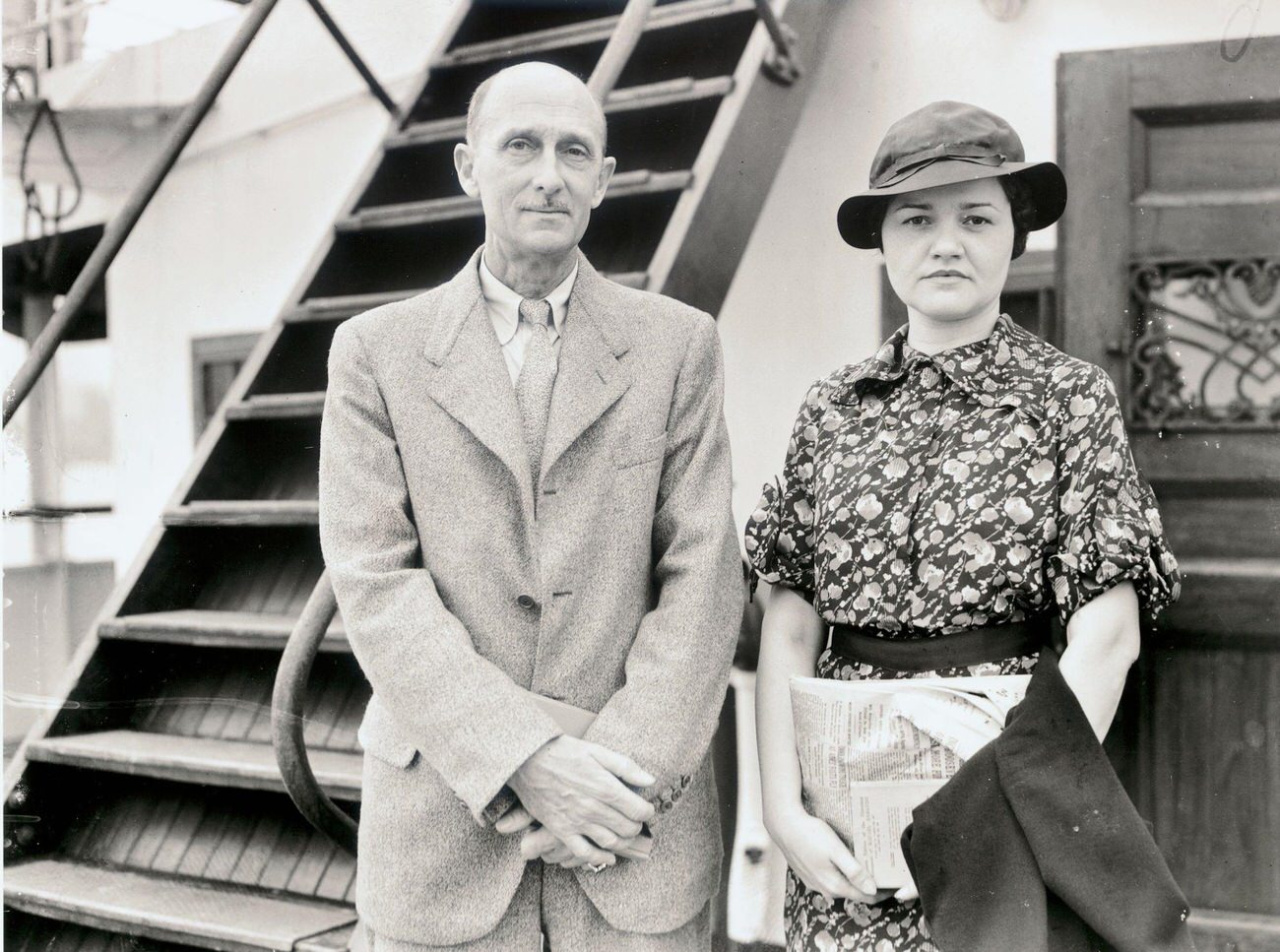
Standing beside a ship’s staircase, marine explorer William Beebe appears freshly returned to routine, dressed in a neat suit and tie while he faces the camera with a restrained, travel-worn calm. At his side, his wife holds papers and a folded coat, her brimmed hat and patterned dress evoking the practical style of interwar-era travel. The setting—railings, steps, and a nearby doorway—suggests the moment of arrival, when ocean passage gives way to the bustle of the dock.
Travel photographs like this sit at the crossroads of celebrity and everyday life, turning a private journey into public record. The title points to a European vacation, yet the scene feels deliberately unglamorous: no sweeping landmarks, just the functional architecture of a vessel and the composed posture of two people who know they are being watched. That contrast adds texture to Beebe’s public image, reminding viewers that the celebrated world of exploration was also sustained by schedules, crossings, and quiet companionship.
For readers interested in the history of exploration, maritime travel, and early 20th-century science culture, this portrait offers a grounded glimpse of Beebe beyond the expedition narrative. It also works as a small study in travel-era material details—paperwork in hand, outerwear ready, and the shipboard staircase framing their departure from holiday back to professional life. As part of a WordPress collection tagged with “Inventions,” it pairs nicely with stories about the technologies and logistics that made long-distance travel—and modern fieldwork—possible.