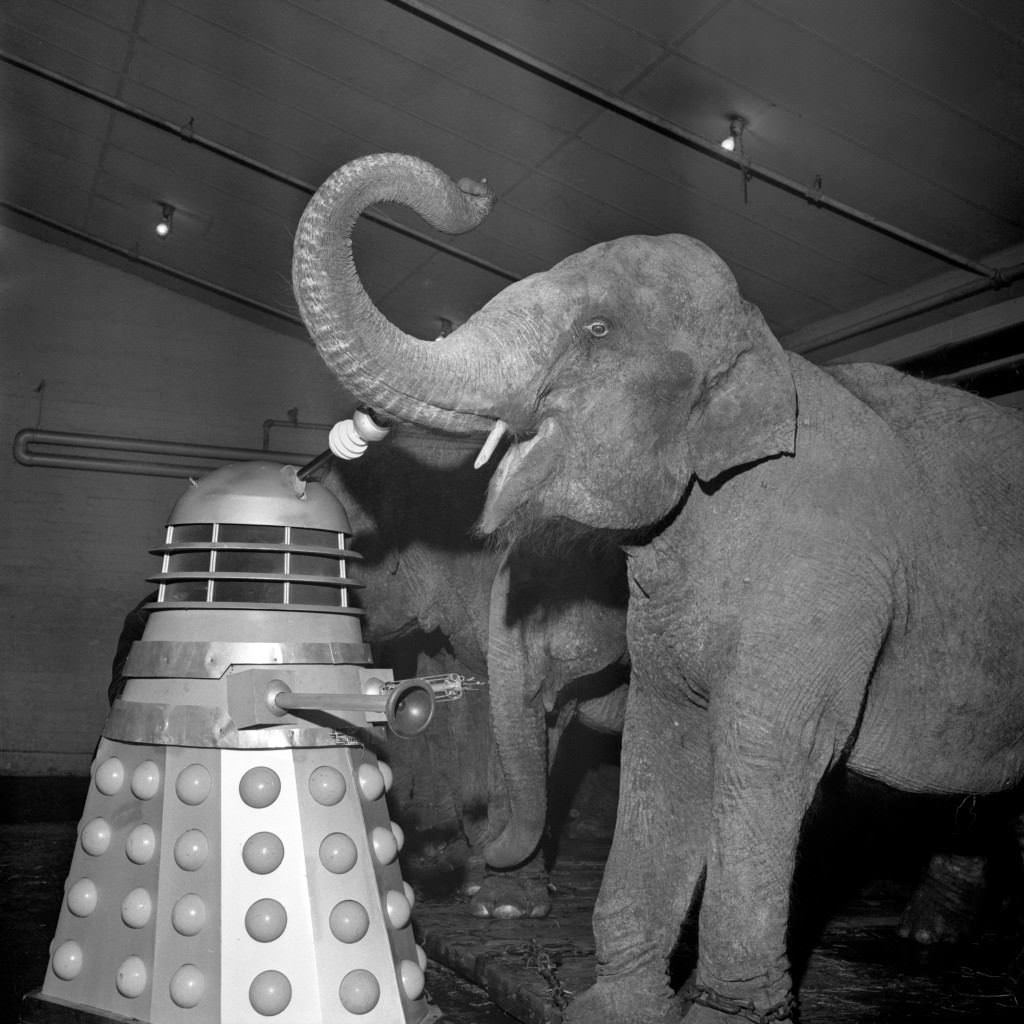
An elephant’s trunk curls inquisitively around a Dalek’s dome, turning a fearsome TV villain into a strange circus prop under the indoor lights of Belle Vue. Metal rivets and rubbery bumps meet wrinkled hide and tusk, and the absurdity is the point: a playful collision of spectacle and science fiction that could only have come from mid‑1960s British popular culture. Even in monochrome, the contrast between the machine’s hard lines and the animal’s living weight feels vivid and tactile.
Set in Manchester in 1965, the scene hints at how quickly Doctor Who’s Daleks escaped the confines of the BBC studio and became a touring attraction, ready for publicity stunts and family entertainment. The circus ring offered an ideal stage for novelty, where “inventions” and illusions could be sold as wonder—part technology, part theater. Here, the Dalek reads less as an alien menace and more as a cleverly engineered costume, designed to be seen up close and laughed with as much as feared.
For historians of television, circus history, or British fandom, this photograph is a small time capsule of crossover marketing before the age of viral campaigns. It speaks to a moment when TV characters could share the bill with performing animals, and when the boundaries between broadcast, live performance, and merchandise were increasingly porous. Whether you come for Doctor Who nostalgia or Belle Vue circus lore, the image preserves a delightfully odd meeting of the futuristic and the traditional.