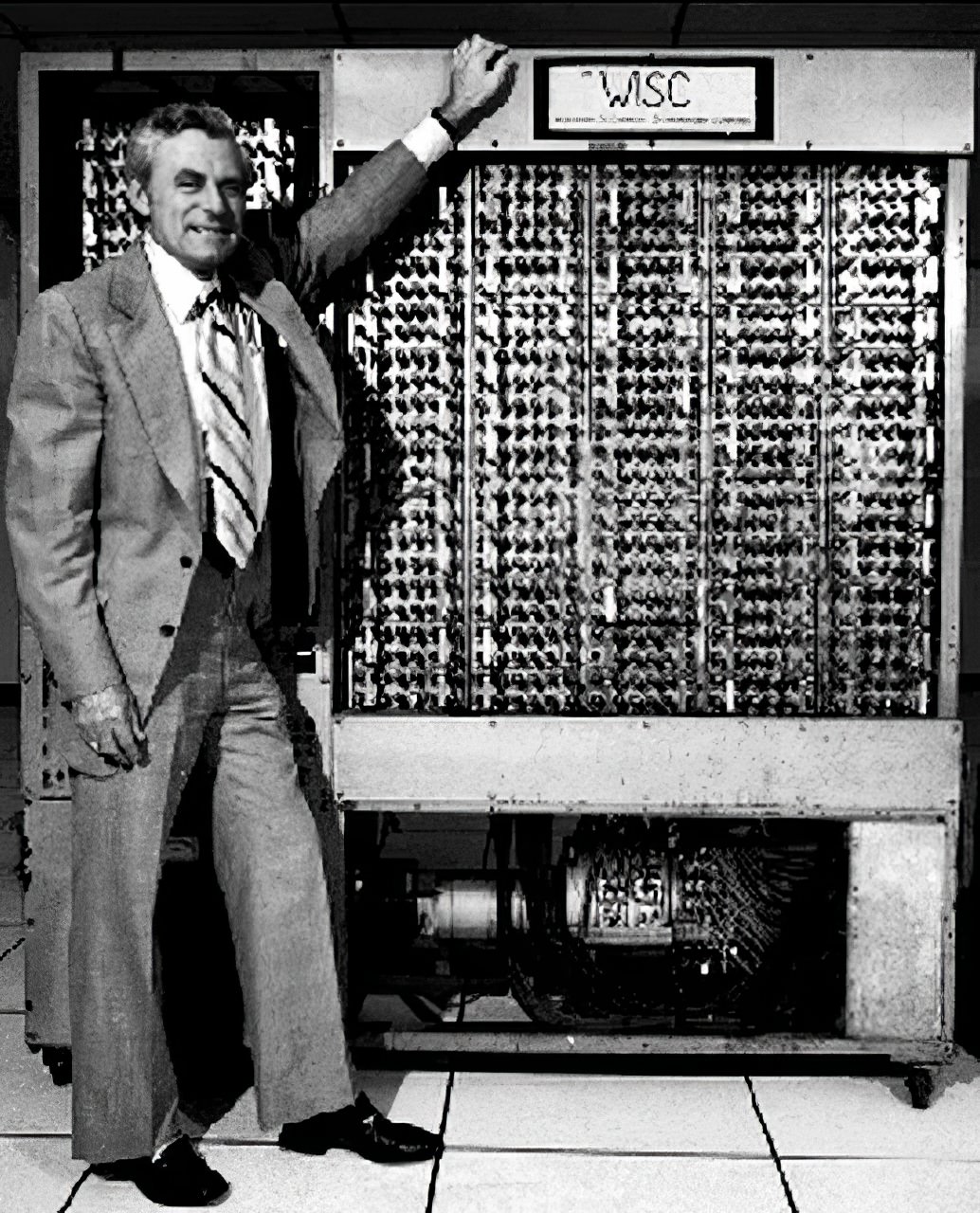
A suited engineer stands beside a towering open-frame cabinet packed with dense electronics, one hand raised as if presenting a breakthrough to the camera. The label “WSC” above the panel and the sea of components—wiring, boards, and tightly arranged modules—convey the physical reality of computing before sleek enclosures and consumer devices. In a single glance, the photo communicates scale, complexity, and the hands-on craft that defined early high-performance systems.
Set against the story of Amdahl Corporation in Sunnyvale, California, the scene evokes the competitive energy of Silicon Valley’s formative years, when computer manufacturers pushed the boundaries of mainframe-compatible design and faster processing. Founded in 1970 by Dr. Gene Amdahl, the company’s legacy is tied to the architecture and performance thinking that shaped the era of big iron computing. Even without a visible date, the clothing, equipment, and laboratory-like environment place this firmly in the period when innovation looked like racks, backplanes, and meticulous assembly.
For readers interested in the history of computing, Amdahl Corporation, and the industrial roots of today’s digital world, this image serves as a vivid reminder that “inventions” were built component by component. It’s a snapshot of engineering culture: proud presentation, tangible hardware, and the ambition to redefine what machines could do. As a piece of Sunnyvale tech history, it helps anchor the broader narrative of how computer manufacturing evolved from room-sized systems into the modern landscape.