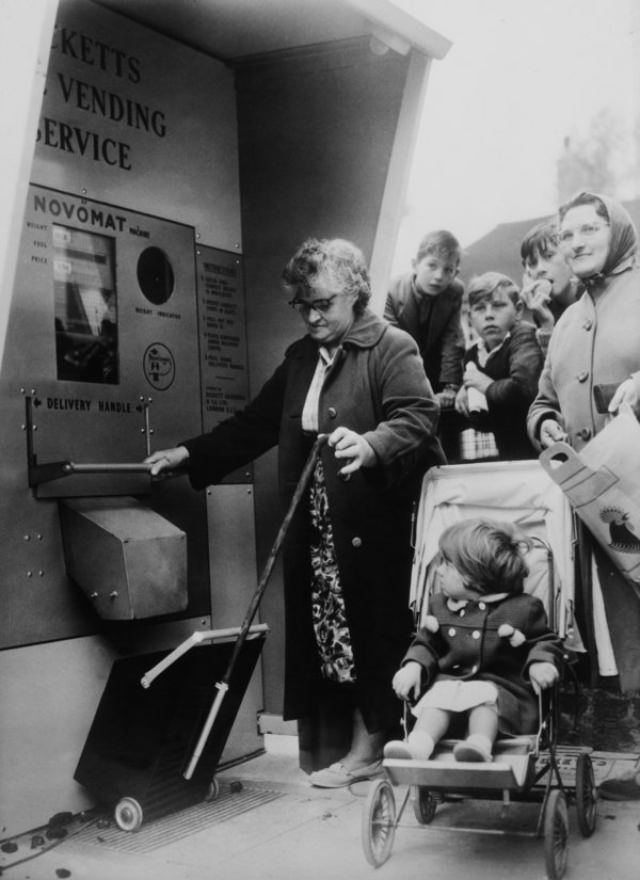
Queueing beside a metal kiosk, families watch as a coal vending machine does the work once handled by a delivery man and a sack. The panel reads “KETTS VENDING SERVICE,” and the machine itself is marked “NOVOMAT,” with a clear set of instructions and a prominent handle for release. A woman in a coat and glasses reaches toward the mechanism while children lean in, their attention fixed on the promised drop of fuel.
What makes the scene so striking is how ordinary domestic life meets industrial innovation in the open air: a pram at the front, shopping in hand, and a household necessity dispensed on demand. The chute and waiting receptacle suggest a measured portion rather than a messy heap, hinting at early attempts to standardize and automate everyday purchases. Even without a visible street sign, the title’s England setting fits the era when coal remained central to heating and cooking, and new systems sprang up to simplify supply.
For readers interested in British social history, inventions, and the transition toward self-service retail, this photo offers an unusually tangible glimpse of change. It speaks to the practical pressures of fuel management—time, labor, and reliability—while also capturing the curiosity such machines inspired in passersby. As a historical image of a coal machine distributor in England, it underscores how innovation often arrived not with fanfare, but quietly, in the routines of the pavement and the queue.