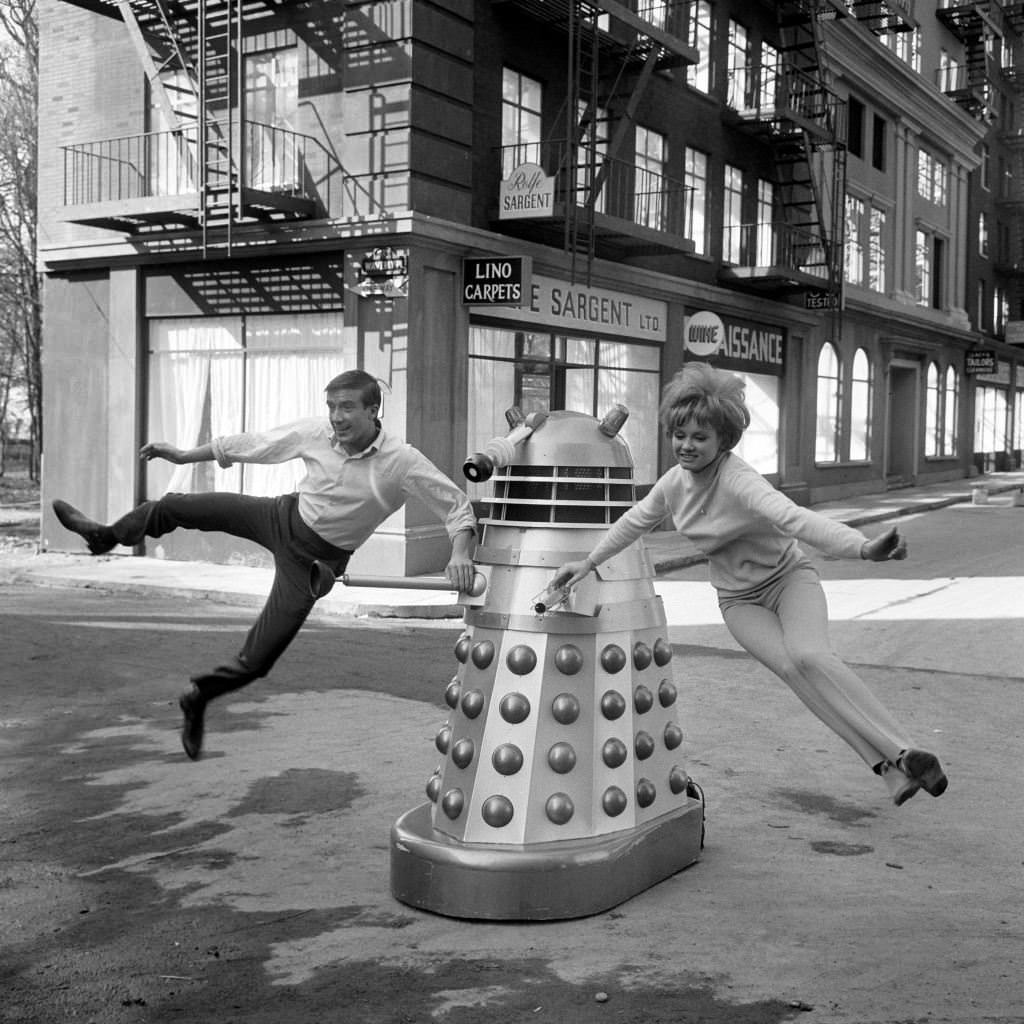
Playful energy spills across a studio backlot as Roy Castle and Jennie Linden throw themselves into a dance routine beside one of cinema’s most memorable robots: a Dalek. Their mid-leap poses turn the metal menace into an unlikely dance partner, capturing the cheeky publicity spirit that often surrounded mid-1960s British film production. The title places the moment at Shepperton Studios during the making of “Dr Who and the Daleks” in 1965, when science fiction and showbusiness were learning to share the same stage.
Behind them, the constructed street set reads like a slice of everyday commerce—shopfront signage, big windows, and external metal staircases climbing the brick façades. That ordinary urban texture makes the Dalek’s riveted casing and eyestalk feel even more surreal, a piece of “inventions” dropped into a believable world. It’s a reminder that these futuristic nightmares were built by craftspeople, then rolled out into sets designed to look convincingly familiar.
For fans of Doctor Who history and British cinema, the photograph offers a rare look at how the franchise’s iconography was marketed: with humor, movement, and a touch of spectacle. Castle and Linden’s exuberance speaks to a time when promotional images could be as theatrical as the film itself, bridging pop culture and production life. As an SEO-friendly snapshot of Shepperton Studios, Daleks, and 1960s sci‑fi filmmaking, it preserves the lighter side of an enduring screen legend.