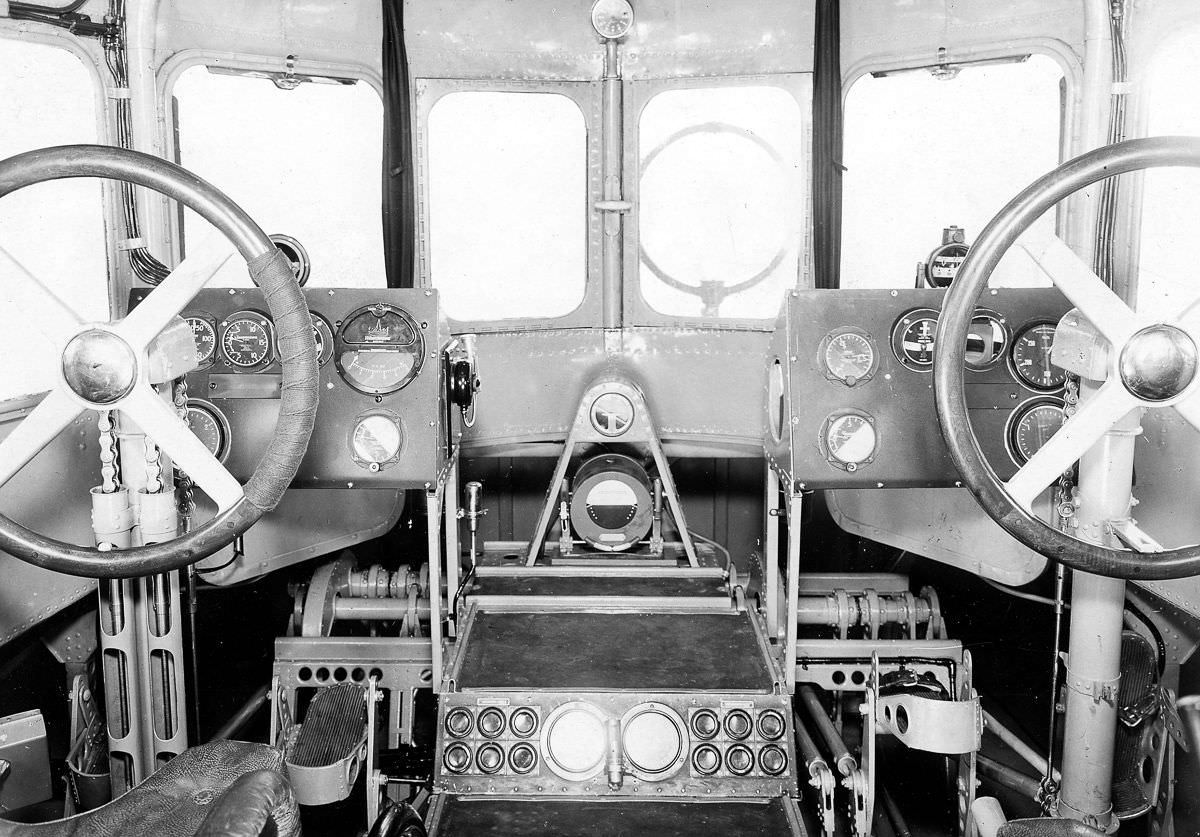
Twin control wheels dominate the cramped cockpit of the Dornier Do-X, their spokes and metal hubs framed by a tight forest of levers, cables, and riveted structure. Ahead, a broad bank of windows floods the space with light, while a centered sighting or navigation instrument sits like a small altar between the pilots’ stations. The overall impression is both symmetrical and industrial—an early airliner flight deck built less for comfort than for command.
Instrument panels on either side carry clustered round gauges, the kind of analog dials that demanded constant attention and practiced hands. Below the glare shield, additional indicators and switches form a compact command center, hinting at the complexity of managing a pioneering flying boat of this scale. Details like the exposed mechanical linkages and robust fittings reveal an era when aviation engineering was proudly visible, not hidden behind plastic housings and screens.
Dated in the title to Oct. 31, 1930, the photograph offers a rare, intimate look at how long-distance flight was actually flown—by reading needles, listening, and coordinating in tight quarters. For readers interested in aviation history, the Dornier Do-X cockpit stands as a snapshot of interwar innovation, when designers experimented boldly with size, range, and control. It’s a compelling reminder that the romance of early air travel rested on meticulous instrumentation and the physical labor of piloting.