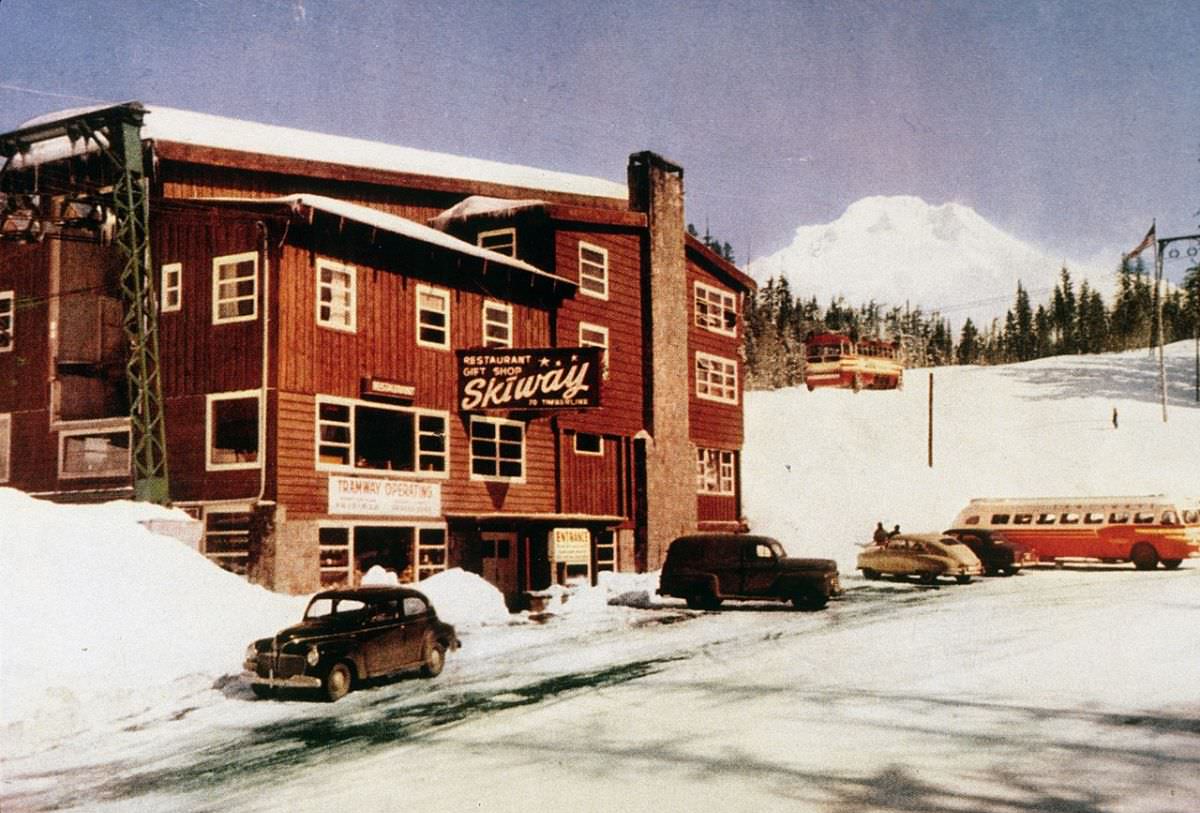
Tucked into a deep winter landscape at Government Camp, Thunderbird Lodge stands beside the bottom terminal of the Mt. Hood Skiway, its red siding and tall stone chimney rising above banked snow. The bold “Skiway” sign advertises a restaurant and gift shop, hinting at the bustle of a mountain stop that served more than just skiers. In the distance, Mt. Hood looms under a pale sky, anchoring the scene with the unmistakable presence that has drawn generations to this slope.
Parked along the icy roadside, mid-century cars and a red bus underline how ski culture expanded once reliable roads and motor travel made weekend snow trips possible. The lodge feels like a hub—part lodging, part gathering place, part gateway—where cold hands could warm up before heading back out. Even without identifying individuals, the composition suggests a steady rhythm of arrivals and departures as people filtered between town, terminal, and mountain.
For anyone searching Mt. Hood history, Government Camp Oregon nostalgia, or early Pacific Northwest ski resorts, this photo offers a richly detailed look at the built environment that supported recreation in the Cascades. The Skiway terminal infrastructure, the lodge signage, and the snow-packed lot together tell a story of tourism, invention, and adaptation to alpine winters. It’s a reminder that mountain towns were shaped as much by food, shelter, and transportation as by the runs themselves.