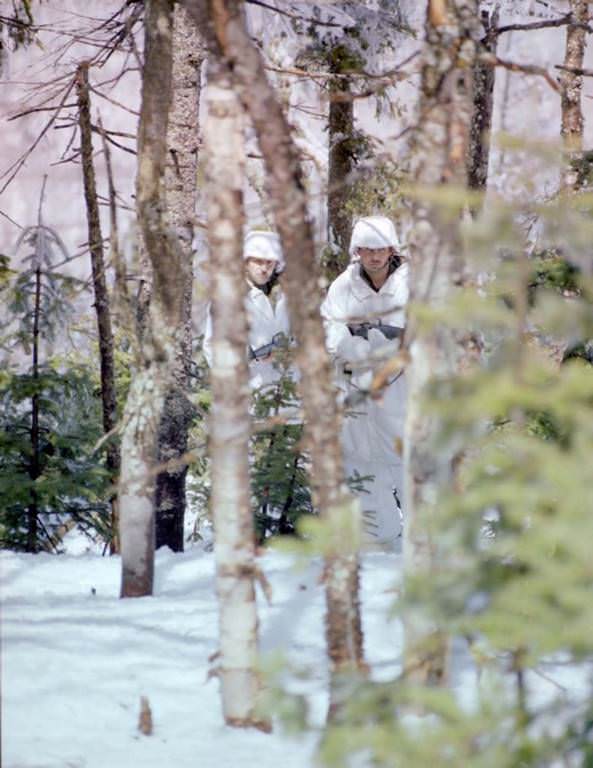
Between the slim trunks and low winter brush, two figures in white move almost silently through a snowy woodland, their outlines softened until they read as part of the landscape. The snow suits—hooded, loose, and deliberately plain—blend into the pale ground while patches of darker gear and shadows betray just enough human presence to keep the eye searching. Even the camera’s viewpoint feels like a lookout’s perspective, peering through trees as if trying to spot what the clothing is designed to conceal.
Camouflage snow suits from roughly 1981–1984 speak to a practical kind of invention: not a flashy gadget, but a refined solution to the problem of visibility in winter terrain. The design relies on simple principles—color matching, broken silhouettes, and fabric that can be worn over standard clothing—yet the effect is dramatic in the right environment. In a season when snow can turn forests into bright, high-contrast spaces, white over-suits offered a tactical advantage for training, patrols, and field movement.
Quietly compelling as a piece of Cold War–era material culture, the scene also preserves the texture of outdoor life in deep winter: crusted snow, close-set evergreens, and the muted palette of bark and frost. For readers exploring military history, winter warfare, or the evolution of camouflage, this photo underscores how environment dictates design and how “inventions” often arrive as incremental improvements made for specific conditions. The result is a striking visual reminder that sometimes the most effective technology is the one meant to disappear.