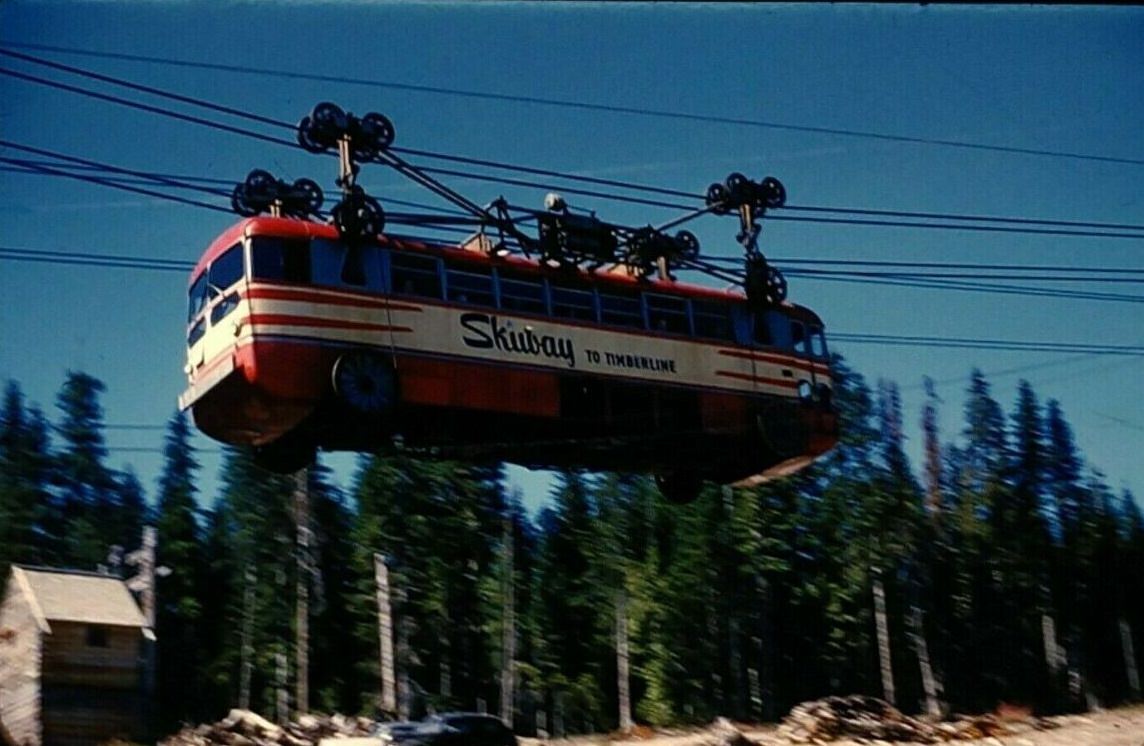
Gliding above the tree line like something borrowed from a science-fiction sketchbook, the Skiway tram looks remarkably like a bus that decided the road was optional. Its red-and-cream body hangs from a web of cables, with clustered wheels and hardware riding the lines overhead, turning a mountain crossing into an aerial commute. Even without snow in view, the scene evokes mid-century optimism—engineering meant to make rugged landscapes feel approachable, comfortable, and a little bit thrilling.
On the side of the car, the painted lettering “Skiway” and the route note “to Timberline” root the moment in Mount Hood, Oregon, tying this invention directly to the region’s ski culture and tourism boom. The forest below, dense and dark with evergreens, emphasizes the height and speed suggested by the slight blur, while the clean sky gives the vehicle center stage. It’s a striking example of how postwar recreation and transportation often blended, with resorts experimenting to move crowds efficiently while advertising modernity itself.
Stories like this are why vintage travel and invention photos endure: they reveal not only what people built, but what they believed the future should feel like. The Skiway’s “flying tram” concept speaks to an era when lift systems, cableways, and destination architecture were transforming American mountain recreation into a mass experience. For readers searching Mount Hood history, 1950s ski innovations, or the quirky evolution of aerial trams in Oregon, this image offers a memorable window into a bold, suspended chapter of winter tourism.