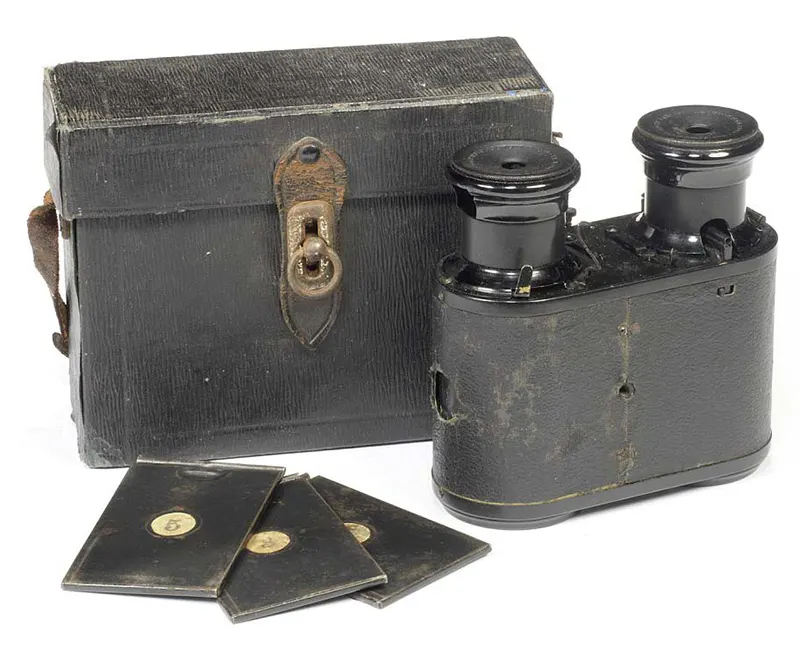
At first glance it could pass for an elegant pair of binoculars, but the Le Physiographe of 1896 was a clever camera hiding in plain sight. The twin eyepiece-like tubes and compact body hint at a designer who understood how easily photography could be folded into everyday objects, especially at a moment when portable cameras were beginning to reshape how people recorded the world. Patented in both Britain and France, it stands as a small but telling example of late‑19th‑century invention culture—part gadget, part sleight of hand.
The photo highlights the instrument’s sturdy, utilitarian finish, with scuffs and wear that suggest real use rather than showroom perfection. Beside it sits its fitted case, and in the foreground a few flat plates (or plate holders) marked with a simple number label, underscoring how different early photography workflows were from roll film convenience. Every surface—metal edges, fastening points, and the raised lens housings—reads like a practical compromise between durability, discretion, and optical necessity.
Collectors and history buffs alike will recognize why disguised cameras fascinate: they reveal the era’s appetite for novelty, mobility, and sometimes privacy. Le Physiographe belongs to the broader story of photographic technology evolving from bulky studio equipment into personal, carryable devices that could accompany travel, leisure, and street life. For anyone exploring antique cameras, early patents, or the inventive spirit of 1890s design, this binocular camera is a striking reminder that innovation often arrived wearing a familiar face.