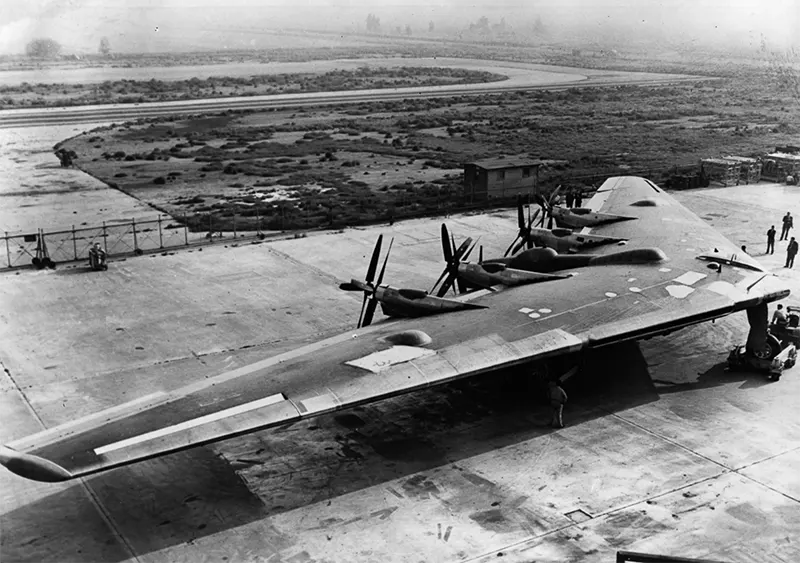
Sprawled across the tarmac like a machine from tomorrow, the XB-35 flying wing commands attention with a silhouette that barely resembles a conventional bomber. Its broad, uninterrupted span and smooth center section hint at the aerodynamic ambition behind the design, while the clustered propellers along the trailing edge suggest the complicated power and control challenges engineers were determined to solve. Even at rest, the aircraft looks less “parked” than poised—an experimental airframe caught between bold theory and the realities of flight testing.
Up close, the photo rewards detail seekers: crews and ground equipment appear small beside the wing, emphasizing just how vast the platform was meant to be. The arrangement of multiple engines and contra-rotating propellers evokes an era when performance gains were chased through ingenious mechanical solutions, not software. For readers interested in aviation history, experimental aircraft, and the evolution of stealthy profiles, the XB-35 stands out as a pivotal chapter in bomber aircraft inventions and the pursuit of efficiency through a radical layout.
Mystique clings to this program because it represents both mastery and uncertainty—an audacious leap toward a future that didn’t arrive quite as planned. The flying wing concept promised range and lift with fewer drag-inducing surfaces, yet demanded new thinking about stability, maintenance, and operational practicality. In that tension lies the enduring fascination: the XB-35 wasn’t merely a prototype, but a proving ground where imagination met metal, leaving a legacy that still echoes in later flying-wing aircraft.