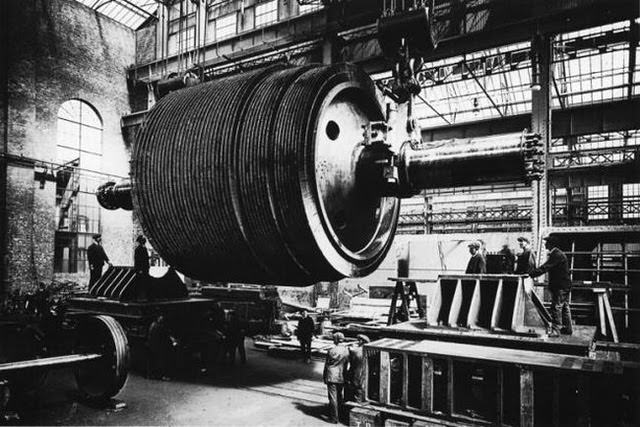
Inside a vast industrial hall, a colossal cylindrical component hangs from an overhead crane while workers stand below for scale, their small figures emphasizing the ambition behind early 20th-century shipbuilding. Ribbed metal, heavy shafts, and the lattice of beams and gantries above create a scene of controlled power—an environment where precision engineering met sheer mass. The photo’s workshop setting, with brick walls and high windows, evokes the noisy, smoke-tinged world that supplied the machinery needed to propel ocean liners into the modern age.
Building the Titanic meant more than assembling a hull; it required an entire ecosystem of inventions and manufacturing methods capable of producing parts this large and complex. The suspended piece suggests the sort of drivetrain or engine-related hardware that had to be forged, machined, and transported with care, then fitted into place with cranes, rigging, and practiced teamwork. Every surface hints at the era’s faith in industrial progress, when “unsinkable” confidence was reinforced by the visible heft of steel and the disciplined routines of the shipyard floor.
For readers searching the story behind Titanic construction, this image offers a grounded reminder that fame begins long before launch day, in workshops where innovation is measured in tolerances and tonnage. The interplay of men, machinery, and infrastructure points to the technologies that made record-setting liners possible—advanced lifting equipment, large-scale metalworking, and the organization of labor around monumental builds. As a historical photo for a WordPress post, it pairs naturally with discussions of Titanic engineering, shipbuilding inventions, and the industrial culture that helped turn maritime dreams into floating reality.