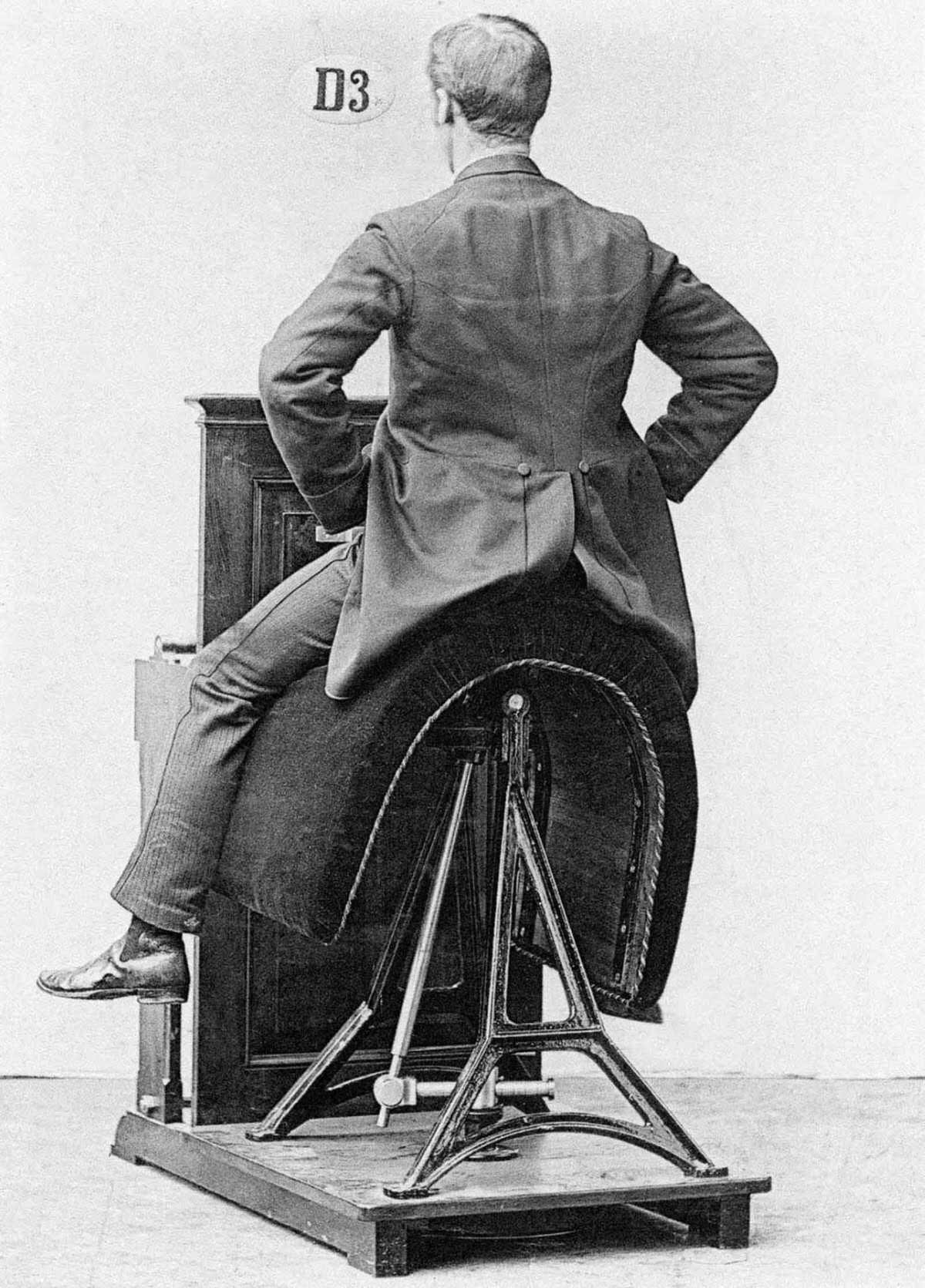
Perched on a padded saddle mounted to a stout metal frame, a well-dressed rider grips a steady posture while the apparatus beneath him promises motion without travel. The contraption sits on a low platform, with braces, pivots, and a central linkage suggesting a controlled rocking or rolling action meant to imitate the rhythm of riding. Even the plain studio backdrop and the small marking on the wall lend the scene a catalog-like, “demonstration of invention” feel.
Mechanized exercise devices like this saddle reveal an era fascinated by engineering the body into better shape, especially through balance and controlled instability. By shifting the seat and forcing the torso to correct itself, the machine would have targeted what we now call core muscles—abdomen, back, and hips—while sparing the user an outdoor ride. The blend of gentlemanly attire and industrial hardware underscores how physical culture, rehabilitation ideas, and novelty equipment often shared the same showroom space.
For modern readers searching the history of fitness equipment, early workout machines, or unusual inventions, this photograph offers a striking ancestor to today’s balance trainers and stationary riding simulators. It captures the moment when mechanical ingenuity tried to replicate natural movement indoors, turning horseback motion into a repeatable regimen. Seen through a contemporary lens, the moving saddle stands as both an oddity and a surprisingly familiar step in the long evolution of exercise technology.