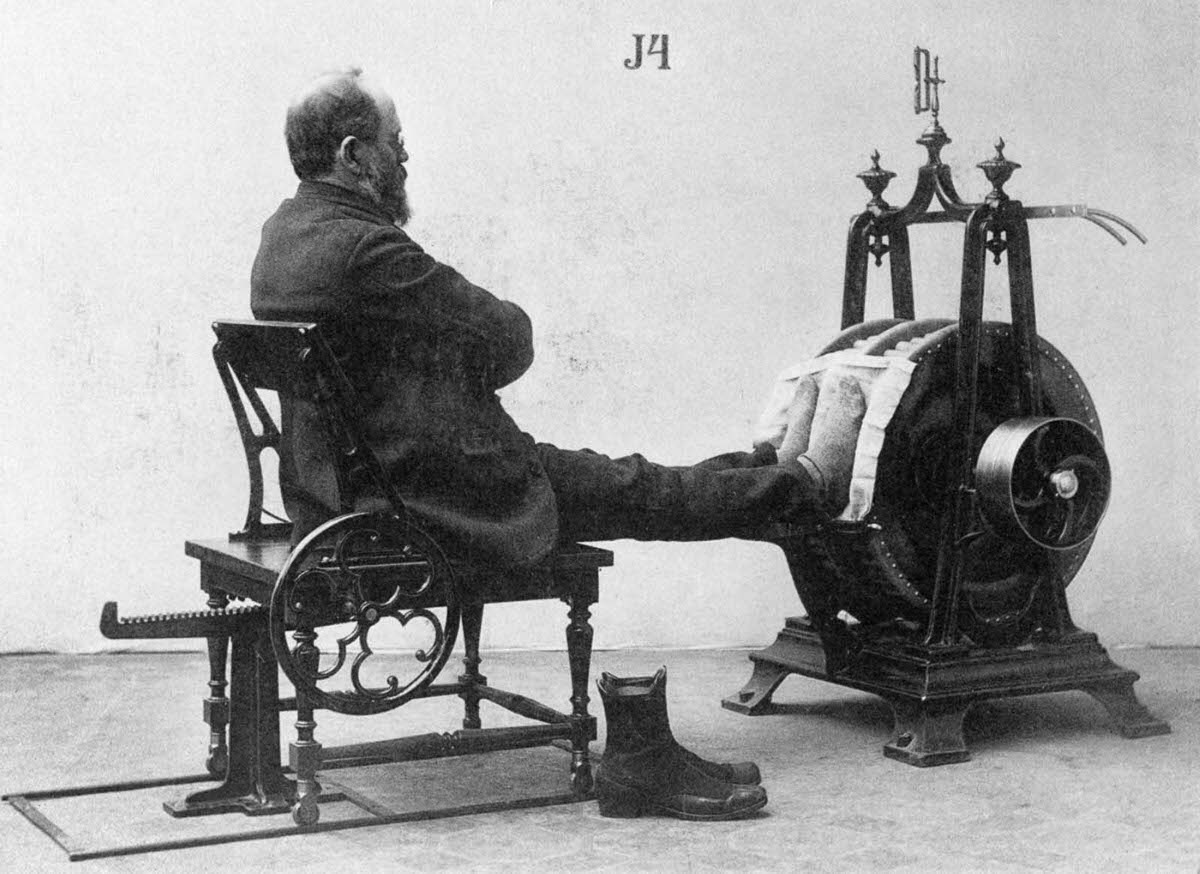
A stout, seated man stretches his legs into a hefty contraption that looks part armchair, part workshop machinery, as if comfort had been rebuilt with bolts and cast iron. Straps secure his lower legs while a large wheel and drum-like housing suggest a powered, rhythmic action meant to work the feet methodically. Even without color, the scene communicates the promise in the title: relief for tired, cold feet through a mechanical foot massage designed to encourage better blood circulation.
In the age of “inventions,” everyday aches became opportunities for ingenious devices, and this foot-massager sits squarely in that tradition of practical wellness. Its ornate metalwork and sturdy frame hint at a time when health aids were expected to be durable, repairable, and visibly engineered—more like farm equipment than spa therapy. The composition reads almost like an advertisement: the user sits calmly, trusting the machine to do what hands would otherwise do, pressing and kneading to warm the extremities.
For anyone interested in the history of massage devices and early home health technology, the photo offers a fascinating snapshot of how circulation and comfort were marketed to ordinary people. It also speaks to a longstanding concern—cold feet, fatigue, and the desire for better blood flow—reframed through mechanical innovation rather than medicine alone. As a piece of vintage invention culture, this image invites us to imagine the sound, motion, and hopeful routine behind a machine built to make daily life feel a little warmer.