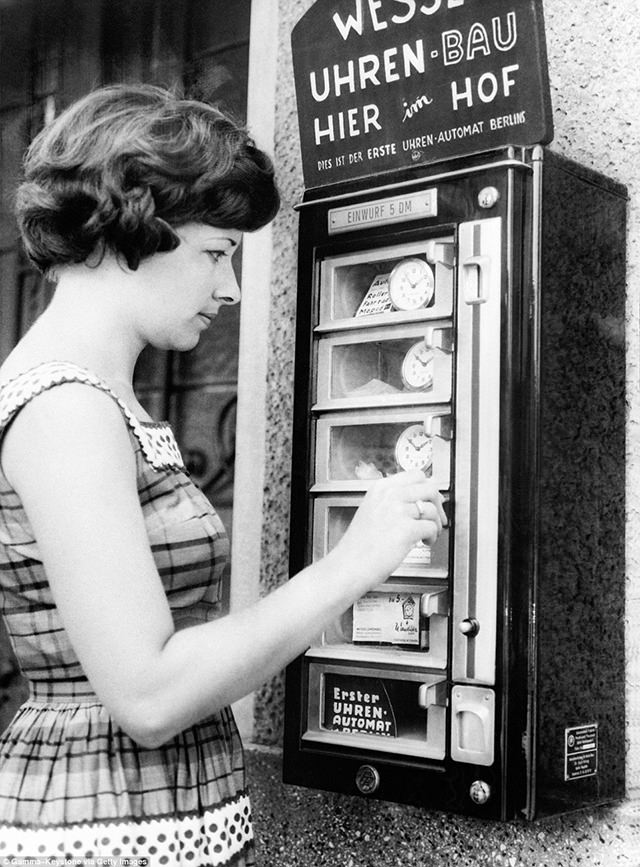
Berlin in the 1960s comes into focus through a small act of modern convenience: a woman stands at a wall-mounted, coin-operated clock vending machine, studying its compartments like a shopper at a miniature storefront. Behind glass sit tidy rows of timepieces, each face turned outward for inspection, while her hand hovers at the selector as if weighing style, price, and practicality in a single glance. The scene feels both intimate and forward-looking, where everyday errands meet the promise of automation.
German text on the sign advertises “Uhren-Bau” and points to an “Uhren-Automat,” a reminder that the era’s fascination with self-service extended beyond snacks and cigarettes into personal goods like watches and clocks. A posted fee (“Einwurf 5 DM”) hints at the familiar ritual of dropping in coins and trusting a mechanism to deliver something precise and valuable. It’s a slice of consumer history that links engineering, retail design, and the growing expectation that machines could streamline city life.
For collectors of vintage technology, Berlin history, or mid-century street photography, this image offers more than novelty—it suggests how time itself was being packaged and purchased in public space. The woman’s focused profile and the machine’s clean, compartmental layout evoke a culture balancing craft with convenience, tradition with modernity. As a WordPress feature on inventions and everyday life in Germany, it’s an SEO-friendly gateway into topics like 1960s consumer culture, coin-operated devices, and the design history of automated retail.