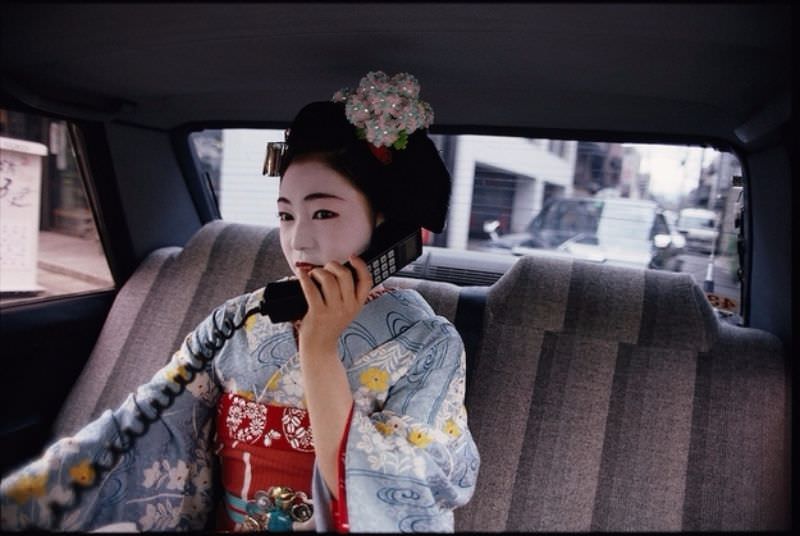
A young woman dressed as a geisha sits in the back seat of a car, her patterned kimono and ornate hair ornaments contrasting with the plain upholstery and the muted city street beyond the window. She holds a bulky handset to her ear, its coiled cord and oversized buttons unmistakably tied to the late-1980s moment hinted at in the title. The pose feels both composed and candid, as if tradition and modern convenience have been asked to share the same frame.
1988 was an era when “mobile” often meant a car phone—status-laden, expensive, and physically tethered to the vehicle—yet it carried the promise of instant connection. In this scene, that promise lands amid the careful aesthetics of geisha presentation: makeup, hairstyle, and textiles that signal continuity with older cultural forms. The result is a striking visual essay on technological adoption, where new inventions don’t replace the past so much as ride alongside it.
For readers interested in Japanese culture, retro technology, and the history of everyday life, this photograph offers a memorable intersection of identity and infrastructure. The car becomes a small moving room where performance, work, and communication overlap, while the handset hints at changing expectations about availability and speed. It’s an image that rewards a slow look, inviting questions about modernity, public image, and the quiet ways technology reshapes social worlds.