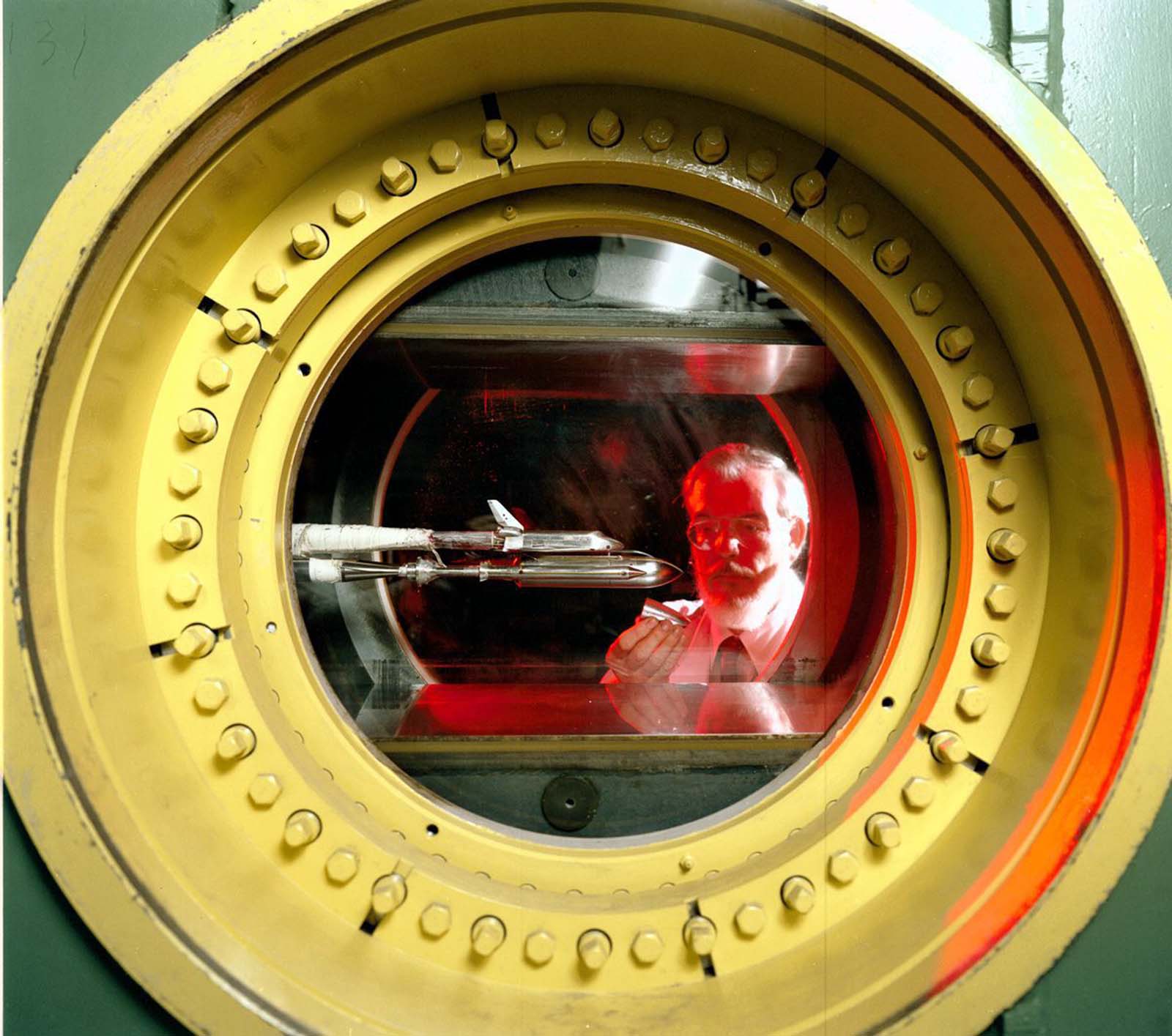
Peering through the thick, bolt-studded window of a wind tunnel, a Marshall Space Flight Center engineer watches a small Space Shuttle orbiter model meet a controlled rush of air. The warm, reddish glow inside the test section gives the scene a laboratory intensity, turning the tunnel’s circular frame into something like a porthole onto the future. At the heart of the setup, the orbiter sits mounted on slender supports—an elegant reminder that before a spacecraft ever flies, it must first survive the invisible physics of lift, drag, and stability.
In his hand is a replica of the proposed Liquid Booster Module, a compact object that hints at the many alternate paths NASA engineers explored as the Space Shuttle system took shape. The juxtaposition is striking: a tiny booster concept held close for scrutiny while, just beyond, the orbiter model undergoes its own trial by wind. Together they represent the practical creativity of aerospace research, where “inventions” are tested not by imagination alone but by measurement, iteration, and hard-won data.
Wind tunnel testing in 1980 sat at a pivotal moment in the Shuttle era, when designs, configurations, and performance expectations were still being refined into something operational. Details like the tunnel’s heavy hardware, the carefully positioned model, and the engineer’s focused posture evoke the culture of precision that defined NASA’s engineering teams. For readers interested in Space Shuttle development, NASA Marshall history, and the behind-the-scenes work of aerospace innovation, this photo offers a vivid glimpse of how big ideas were proven at small scale.