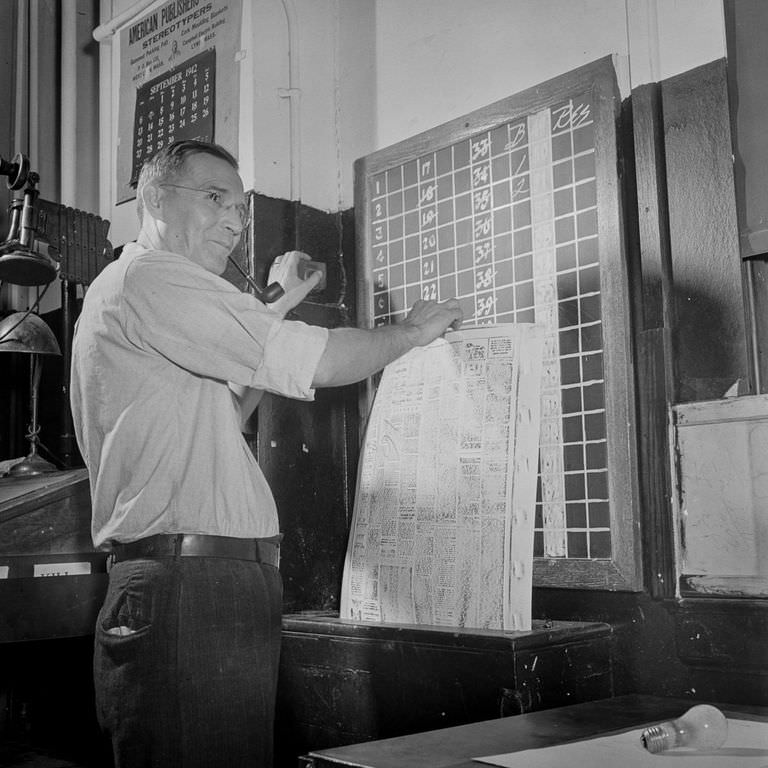
Pressed close to a wall-mounted board ruled into neat columns, a print worker studies a completed mat like a checklist made tangible. The tall sheet—dense with tiny blocks of text and advertisements—hangs beside chalked numbers and quick notations, a visual reminder that newspaper production was as much accounting and routing as it was writing. In the cramped workspace, desk lamps, dark wood, and utilitarian fixtures frame the quiet concentration behind every edition.
The title points to a crucial handoff in the old printing workflow: mats were checked page by page, then sent down a chute to the stereotype room. That simple sequence hints at an industrial choreography where errors had to be caught before metal was poured and the presses roared. In a pre-digital newsroom, quality control lived on boards, in pencil marks, and in the practiced eyes of people who could read a page at a glance.
For readers interested in inventions and the history of printing, the scene offers a grounded look at the machinery of information—how stories and ads became physical objects moving through a plant. The board functions like an early production dashboard, tracking progress and preventing costly mistakes, while the mat itself represents the bridge between composition and plate-making. It’s a reminder that behind the headlines stood skilled labor, careful systems, and the relentless pace of deadlines.