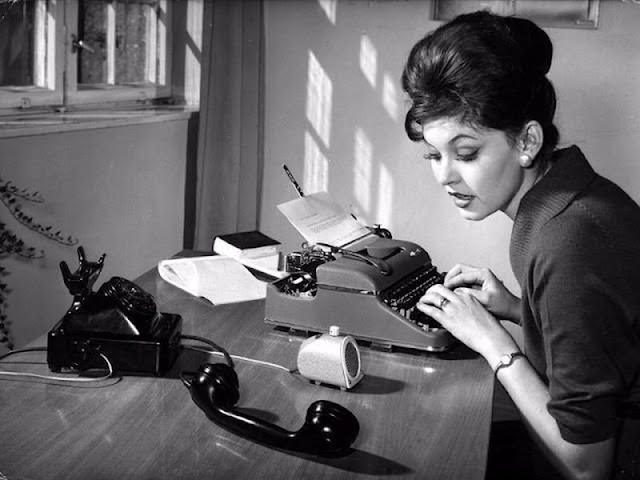
Morning light falls in crisp rectangles across a simple desk where a woman leans toward a sturdy manual typewriter, fingers poised over the keys with practiced focus. A handset telephone rests nearby, its curved cord and heavy receiver hinting at an era when office communication was tactile and immediate. The scene feels intimate and workmanlike at once, pairing the quiet concentration of typing with the ever-present possibility of a ringing call.
Women at typewriters became one of the defining images of modern clerical life, and photos like this underline how “past inventions” reshaped daily routines. The typewriter offered speed, legibility, and a new kind of professional rhythm—paper fed into the platen, lines aligned, mistakes corrected with care—while also opening doors to paid work in offices and administrative roles. Even without a visible company name or place, the familiar tools and posture tell a broader story of changing labor and technology in the twentieth century.
For readers searching historical photos of ladies using typewriters, this moment captures the human side of a mechanical invention that transformed writing from a solitary craft into an organized workflow. Details such as the stacked papers, the compact machine body, and the close reach of the phone evoke an environment built around productivity and precision. It’s a reminder that behind every typed page—letters, reports, and records—stood people who learned the language of keys, ink, and deadlines.