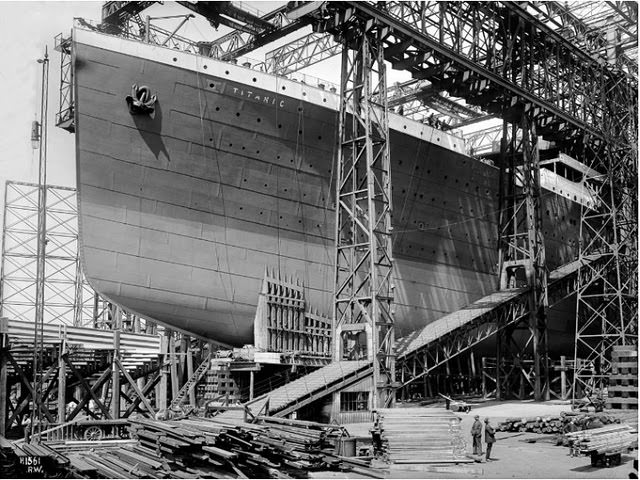
Steel dominates the frame, rising in a cliff-like hull that already bears the name “TITANIC” while scaffolding and gantrywork crowd around it. The bow looms over the shipyard floor, where stacked timbers and lengths of material hint at the constant flow of parts required to build an ocean liner on this scale. In this moment, the vessel is still a work in progress—massive, quiet, and unfinished—yet unmistakably designed to impress anyone who stood beneath it.
Shipbuilding here reads like an early‑20th‑century industrial symphony: riveted plates aligned in long bands, temporary frameworks bracing the structure, and towering cranes positioned to feed the hull its next layer. The photo underscores why Titanic’s construction became a story of innovation and ambition, tied to the era’s engineering confidence and the belief that careful compartmentalization and modern design could master the hazards of the Atlantic. Even without seeing the workshops beyond the frame, you can sense the labor network behind every seam—draftsmen, riveters, fitters, and inspectors translating blueprints into iron reality.
Few subjects attract searchers and readers like the Titanic build itself, and this image offers a compelling doorway into that fascination: the ship before the legend, when “unsinkable” optimism was still taking shape in steel. For a WordPress post focused on inventions and maritime history, it’s a vivid reminder that fame often begins in places like this—among industrial infrastructure, incremental breakthroughs, and the logistics of assembling a floating city. The result is both a construction scene and a cultural artifact, capturing the confidence of an age that believed engineering could outpace disaster.