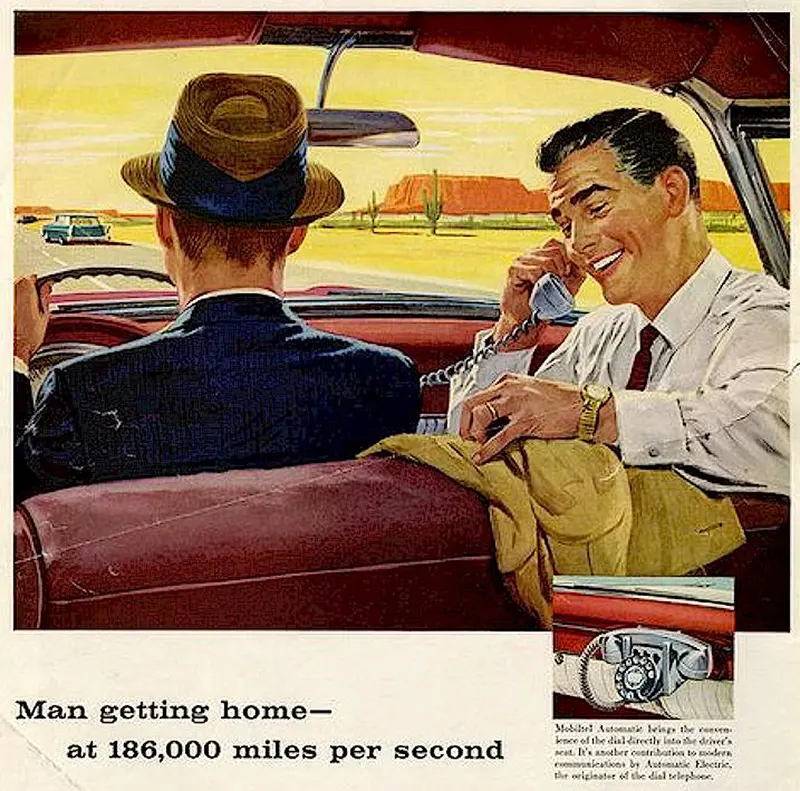
Leaning back in the roomy back seat, a well-dressed passenger smiles into a corded handset while the highway unspools beyond the windshield—an advertising-style scene that sells the thrill of talking from a moving car. The composition lingers on period details: broad bench seats, sharp tailoring, a confident mid-century mood, and the unmistakable presence of a telephone where no telephone “should” be. Even without a visible model badge or date, the message is clear: mobility and modern communication are becoming part of the same dream.
That dream didn’t arrive all at once, and the photo fits neatly into a longer story of car phones from the 1940s to the 1980s, when early mobile radio systems were bulky, expensive, and often marketed as executive tools. Long before pocket-sized cellular handsets, in-car telephone setups relied on radios, operators, and limited networks—more status symbol than everyday convenience. The coiled cord in the scene hints at the hardware realities behind the glamour: dedicated equipment, installation space, and a connection that depended as much on infrastructure as on invention.
For readers interested in technology history, this post uses the image as a doorway into the decade-by-decade evolution of the car phone, from experimental wartime-era concepts through postwar optimism and into the more familiar 1970s and 1980s push toward personal mobile calling. It’s a reminder that what we now call “mobile” once meant furniture-sized components, special service plans, and carefully staged publicity to make the future feel inevitable. Searchers looking for a photo history of car phones, early mobile telephony, or retro automotive tech will find plenty to dial into here.