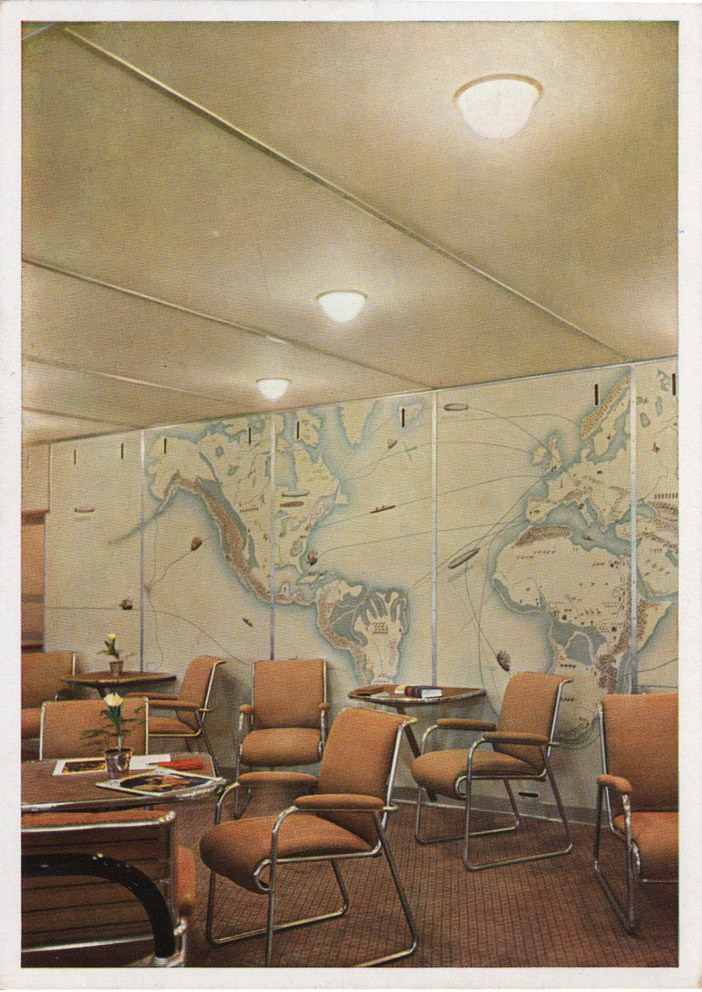
Step into the Hindenburg’s passenger lounge and the first impression is comfort by design: low tables, upholstered chairs with sleek tubular frames, and soft ceiling lights that flatten the shadows into an even, hotel-like glow. Nothing here resembles the raw machinery of flight; instead, the furniture and carpeting suggest a floating salon where long hours aloft could be spent reading, talking, or simply watching the world drift beneath the windows.
Along the wall, an expansive world map mural turns geography into décor, reminding travelers that this was more than transportation—it was a statement about modernity and global reach. The map’s flowing coastlines and route-like lines subtly frame the airship as an invention that stitched continents together, blending technical ambition with the reassuring language of passenger luxury.
Exploring historical photos like this one helps explain why the Hindenburg still fascinates: its interiors were staged to make air travel feel familiar at a time when it was anything but. For readers drawn to aviation history, early 20th-century design, and the culture of grand airships, this image offers an intimate look at how innovation was packaged as elegance, right down to the lounge seating and carefully curated surroundings.