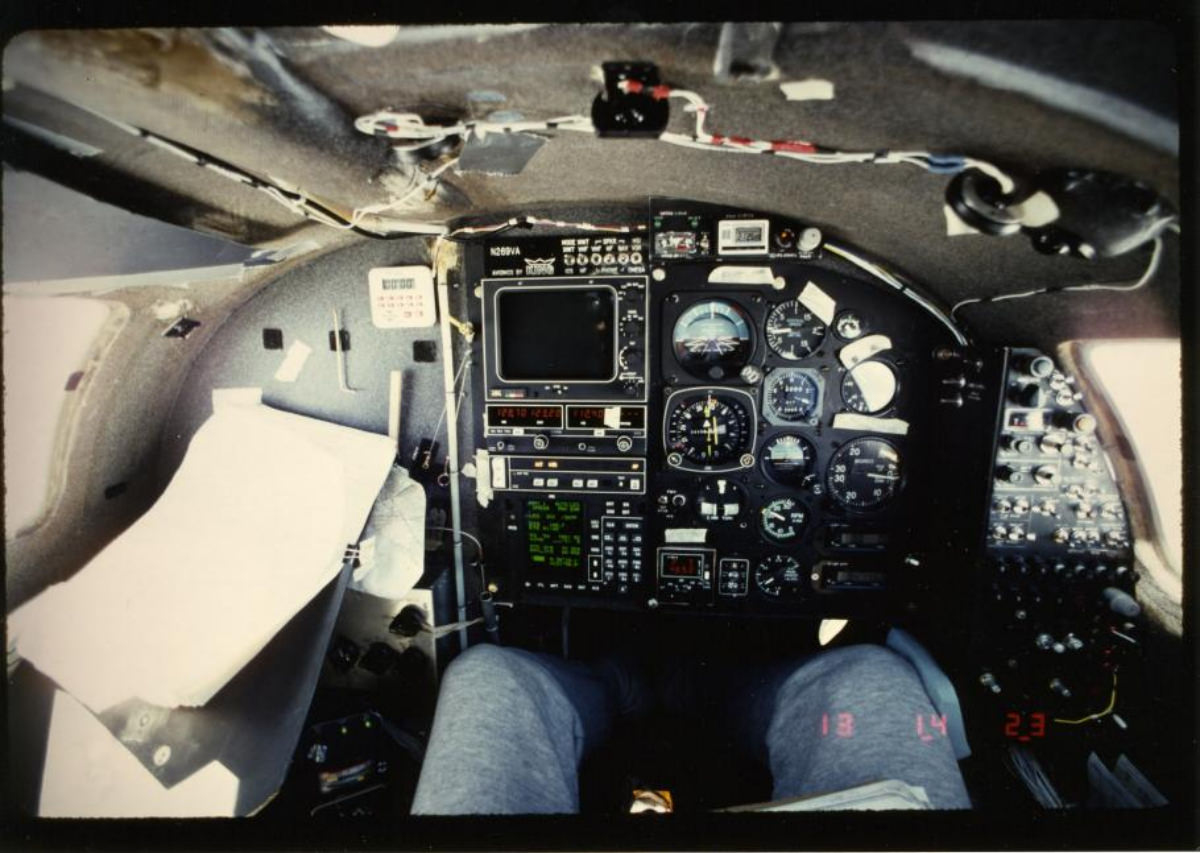
Inside the cramped cockpit, the Rutan Voyager’s world is reduced to a dense instrument panel, handwritten notes, and the steady glow of avionics—an intimate view of the technology that made an around-the-world flight without stopping possible. Dials for attitude, heading, and engine health crowd together with radios and navigation screens, reminding us that endurance aviation is as much about constant monitoring as it is about daring. The photo’s point-of-view angle, looking past a pilot’s knees toward the controls, puts you in the seat where tiny adjustments and long concentration mattered more than dramatic maneuvers.
What stands out is the balance between ingenuity and necessity: a lightweight, purpose-built aircraft environment where every gauge earns its place, and nothing feels decorative. The Voyager story, celebrated in aviation history and invention lore, hinges on systems that had to remain reliable hour after hour—navigation, communication, and the disciplined routines that keep engines and airframe performing at the edge of their capabilities. Even without a visible horizon, the cockpit’s clustered indicators speak the language of long-distance flight: verify, cross-check, and trust the instruments.
For readers searching aviation milestones, record-setting flights, or the engineering behind nonstop global travel, this image offers a grounded, human-scale portal into that achievement. It evokes the fatigue, focus, and relentless decision-making required when “no rest and no refuel” isn’t a slogan but a constraint built into every moment aloft. In the end, the Voyager’s trailblazing journey is remembered not only for its headline feat, but for the quiet cockpit realities captured here—where invention meets endurance one instrument scan at a time.