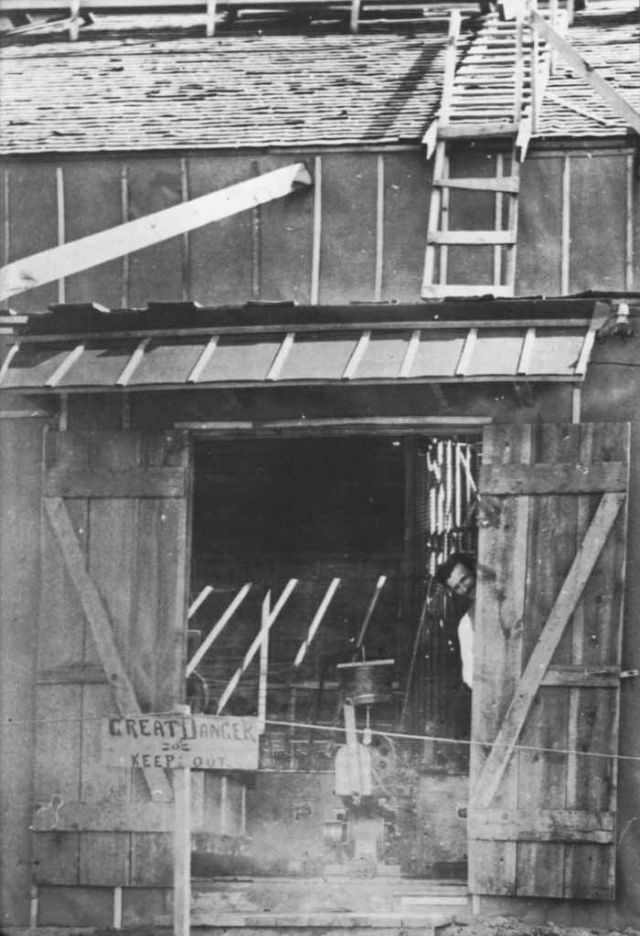
Half-hidden in the shadow of a wide, open doorway, Nikola Tesla leans outward from his Colorado Springs laboratory in 1899, framed by rough timber doors and the stark geometry of a working research shed. A ladder climbs toward the roofline above him, while the dark interior hints at the scale of apparatus kept inside—an austere stage for experiments that helped shape the modern imagination of electricity.
What draws the eye is the contrast between the plain structure and the sense of contained power: heavy beams, utilitarian planks, and a threshold that feels like the border between everyday life and high-voltage ambition. Details like the warning sign posted near the entrance add to the mood, suggesting a place where curiosity met real danger, and where “inventions” were not abstractions but physical systems humming, sparking, and demanding respect.
For readers interested in Tesla history, early electrical engineering, and the Colorado Springs experiments, this photograph offers an intimate glimpse of the inventor at work rather than on a lecture platform. It’s a reminder that breakthroughs often emerge from improvised spaces and relentless testing, with a single doorway opening onto ideas that would travel far beyond the lab’s wooden walls.