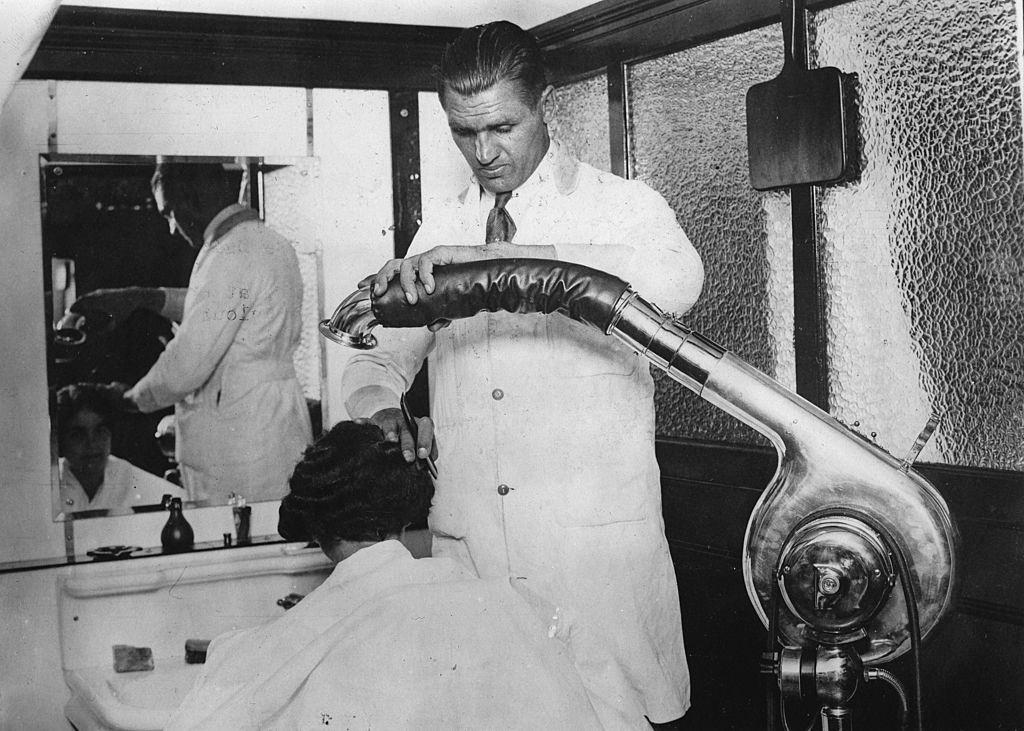
Inside a bustling early-20th-century barbershop or salon, a stylist in a white coat leans over a seated client while an oversized, turbine-like hair dryer dominates the frame. A thick, flexible hose arcs from the machine to the head, suggesting an era when “modern” grooming relied on industrial-looking hardware as much as it did on scissors and combs. The mirrored background, tiled surfaces, and clinical uniforms hint at a time when personal care businesses sold hygiene and technology together.
What makes these different hair dryer models so fascinating is the blend of optimism and awkward practicality: large motors, metal housings, and ducted air delivered with the confidence of a new invention still finding its form. Before compact handheld dryers became everyday bathroom staples, salons experimented with contraptions that look closer to workshop equipment than beauty tools. The photo underscores how 20th-century inventions often arrived first as bulky, specialist machines—impressive, loud, and undeniably attention-grabbing.
For readers exploring the bizarre history of hair dryers, this snapshot offers more than nostalgia; it shows the transition from mechanical ingenuity to modern convenience. The design speaks to early electrification, changing beauty routines, and the rise of professional salon culture, when speed and efficiency became selling points. Browse the post for more historical photos and hair dryer designs that chart how airflow, heat, and style evolved across the century.