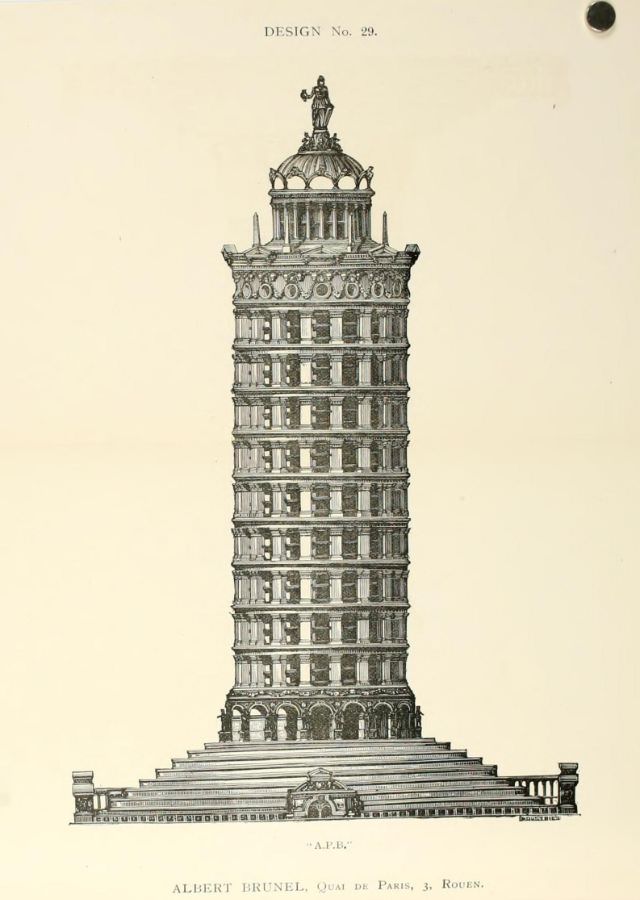
Numbered “Design No. 29” at the top, this plate reads like a page torn from an ambitious Victorian-era competition portfolio, when more than 50 competitive designs were proposed for a “Great Tower for London” amid the inventive spirit of 1890. The drawing presents a tall, rectangular shaft articulated by relentless tiers of windows, as if the designer wanted to prove that height could be made orderly, rentable, and modern all at once. Fine linework and careful symmetry give the concept the authority of an engineering document, while still inviting the daydream of a new landmark rising above the city.
At the summit, a domed crown and colonnaded lantern break the strict grid, topped by a sculptural figure that turns the structure into a monument rather than merely a tall building. Midway up, a decorative band of roundels and ornament suggests a conscious nod to classical motifs, wrapped around what otherwise feels like an early vision of the skyscraper age. Below, an expansive stepped base and arched openings create a ceremonial podium, implying an entrance meant for crowds, promenades, and civic display—an architecture of spectacle as much as function.
For readers searching Victorian inventions, London tower proposals, or unrealized architectural competitions, this historical illustration offers a vivid glimpse into the period’s confidence and rivalry. It captures the tension between tradition and innovation: classical dressings perched atop a relentlessly practical stack, all presented with the crispness of a patent-like proposal. Whether you’re exploring speculative landmarks, nineteenth-century design culture, or the roots of high-rise imagination, “Design No. 29” stands as a striking contender from a moment when London’s skyline was being argued on paper.