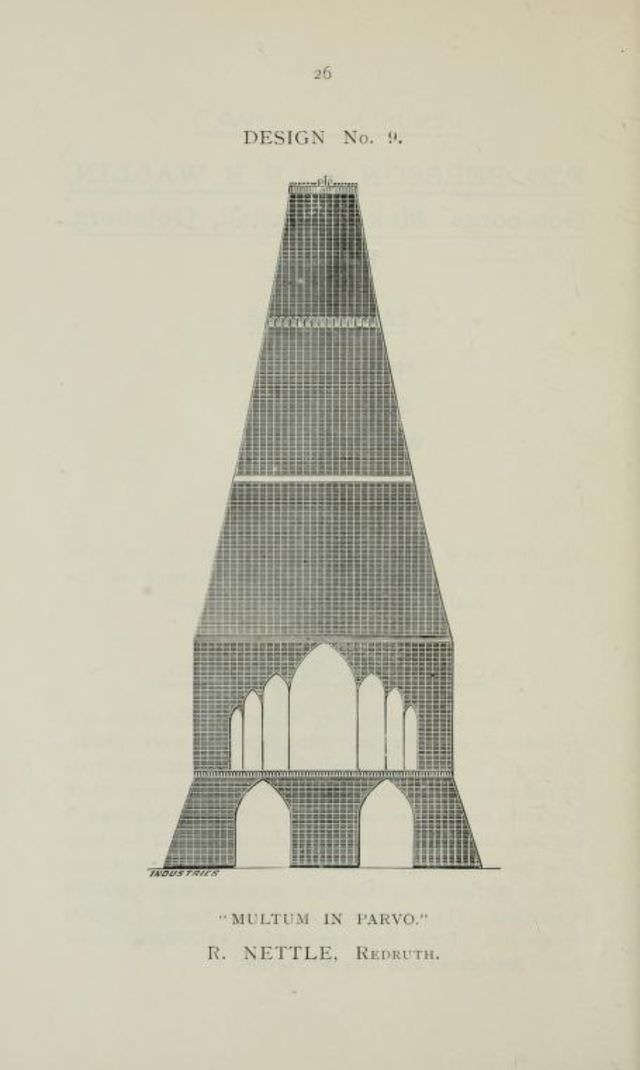
Page 26 of the old compilation is headed “DESIGN No. 9.”, presenting a bold proposal for a “Great Tower for London” associated with the 1890 inventions-era competition. The drawing is pared down to a clean elevation: a steep, tapering mass laid out in a strict grid, with only a few horizontal bands breaking the climb toward a small crown-like top.
What immediately catches the eye is the base, where tall pointed arches open like a skeletal cathedral frontage, hinting at public passageways or monumental entrances beneath the towering body above. That contrast—Gothic-inspired voids supporting a largely modern, almost industrial surface—speaks to the era’s fascination with blending historic forms with new engineering confidence, the kind of ambition that drove dozens of competitive designs to the judging table.
Beneath the illustration, the motto “MULTUM IN PARVO” appears alongside “R. NETTLE, REDRUTH,” grounding the concept in the real paperwork of submission and authorship. As part of a collection of “50+ competitive designs submitted,” this sheet is a reminder that the story of London’s great tower dreams isn’t only about what was built, but also about the many inventive ideas—some austere, some ornate—that tried to define the city’s skyline on paper first.