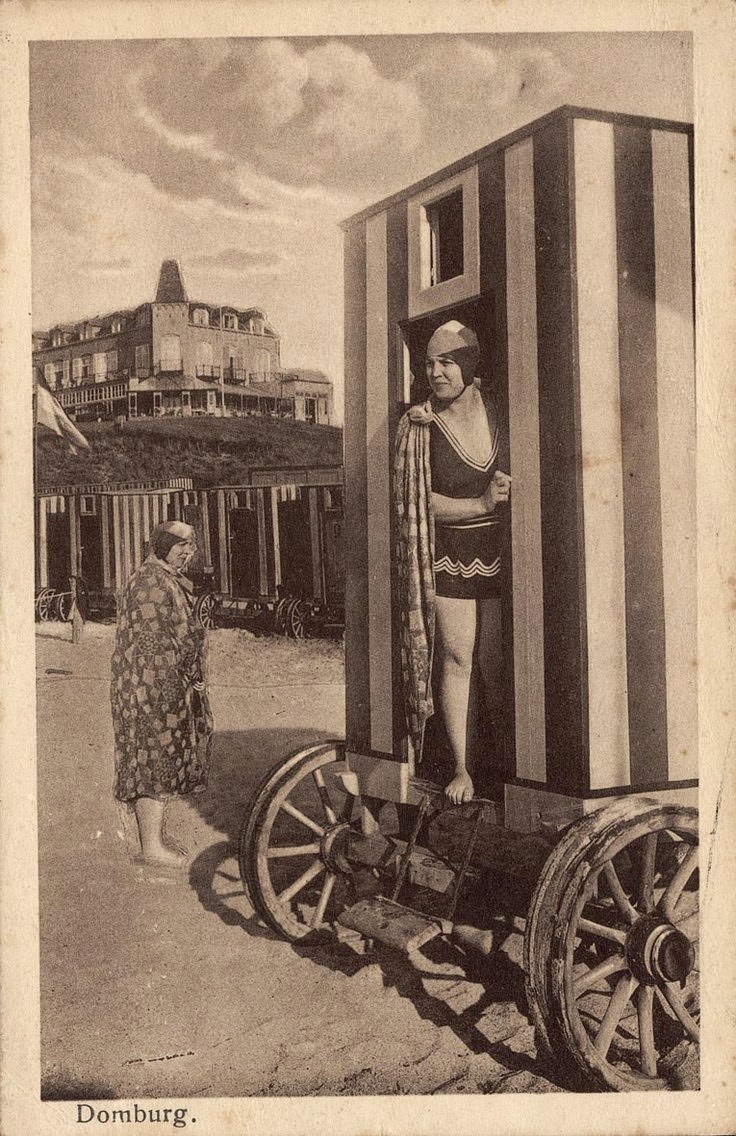
Striped wood panels rise like a tiny seaside cabin on wagon wheels, parked right on the sand, with a bather stepping out in an old-style swim outfit while another figure lingers nearby in a patterned wrap. Behind them, more wheeled changing huts line up in a row, turning the beach into a temporary village of privacy screens and practicality. Even without motion captured, the design implies it: a portable room meant to be pulled closer to the water, letting swimmers change discreetly before wading in.
Bathing machines were a Victorian-era solution to a modern problem—how to enjoy sea bathing while preserving modesty, especially in crowded resorts where promenades and onlookers were part of the attraction. These boxy carriages blended social rules with clever engineering, offering an enclosed changing space that could be rolled by hand, horse, or attendants. The result was a peculiar choreography of seaside leisure: arrive, enter the wooden cubicle, transform into beachwear, and emerge only when ready.
Going Swimming On Wheels explores this inventive chapter in beach history through 50+ historic photos, tracing how bathing machines shaped coastal culture from strict etiquette to the gradual relaxation of swimwear norms. The images highlight details that rarely make it into standard accounts of Victorian life—wheels sunk in sand, striped façades for easy spotting, and the everyday people who used them. For anyone interested in the history of swimming, seaside resorts, and unusual Victorian inventions, this collection offers a vivid look at how privacy was literally built into the shoreline.