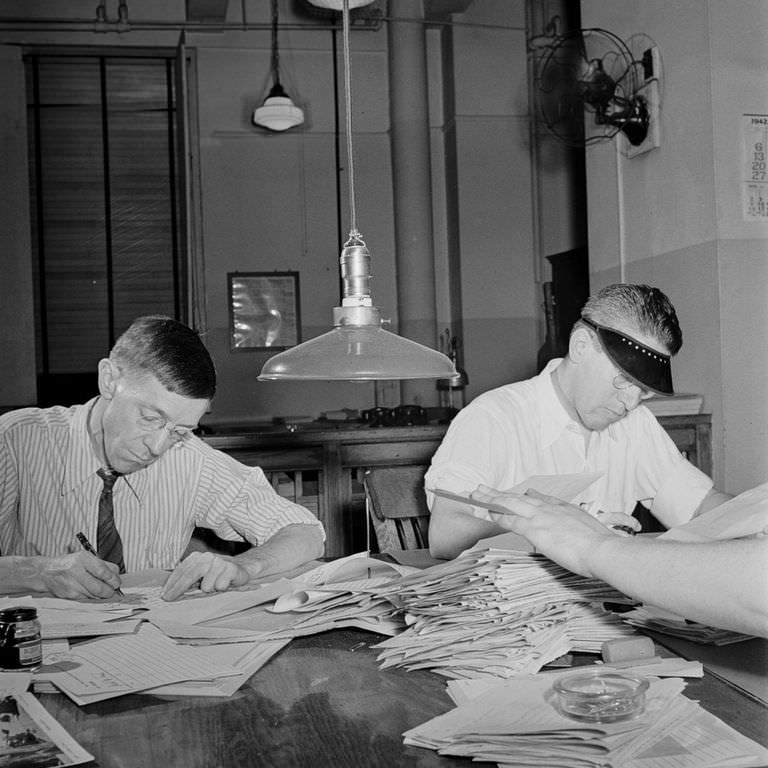
Under the harsh glow of a hanging lamp, the foreign desk works through a small mountain of copy, turning scattered reports into publishable news. Two men lean into their tasks—one bent over a page with pen in hand, the other scanning sheets with practiced focus—while the tabletop fills with stacked drafts, blotters, and the everyday clutter of a busy newsroom. The setting feels utilitarian and fast, built for decisions made in minutes and words weighed line by line.
Editing here is manual, tactile labor: papers shuffled, margins marked, and paragraphs tightened without the safety net of “undo.” The title’s vivid detail—an editor “spiking” a story—evokes an older newsroom ritual where rejected copy was literally impaled on a metal spike, a blunt symbol of authority and triage. That gesture captures the foreign desk’s pressure in particular, where incoming dispatches had to be judged quickly for reliability, relevance, and space.
Small period details deepen the scene’s authenticity, from the wall calendar and the whir of an electric fan to the dense stacks of wire copy waiting their turn. For readers interested in journalism history, newsroom culture, or the evolution of editing practices, this photograph offers a grounded look at how international news was filtered before digital workflows. It’s a reminder that the day’s “world” was once assembled by hand, one decision—and sometimes one spike—at a time.