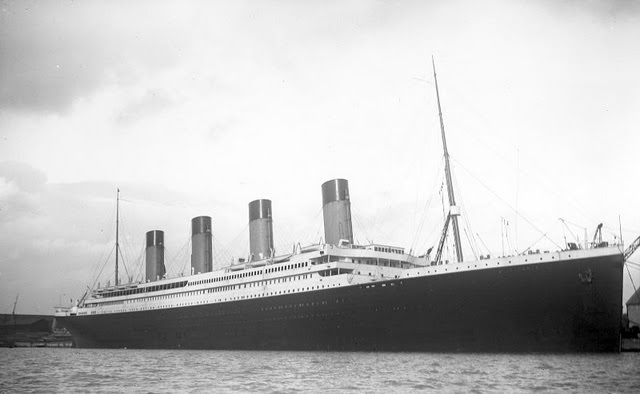
Rising above the harbor waterline, the great liner’s long black hull and tiered white decks stretch like a floating city, crowned by four stout funnels that became an instant signature of modern ocean travel. Even at rest, the ship looks engineered for momentum: clean lines, a high bow built to shoulder through seas, and rows of portholes and promenade spaces that hint at both power and comfort. It’s the kind of scene that explains why the Titanic’s construction was treated as a triumph of ambition as much as a feat of maritime design.
Behind that imposing silhouette sits a story of invention—new industrial methods, precision metalwork, and the complex choreography required to assemble a vessel of unprecedented scale. The promise of being “unsinkable” wasn’t a single claim so much as a marketing aura built on confidence in contemporary engineering, from compartmentalized planning to advanced onboard systems meant to keep passengers safe, fed, informed, and entertained. Looking closely at the ship’s proportions and layered superstructure, you can almost feel the era’s faith in progress and the belief that technology could tame the Atlantic.
For readers searching the Titanic construction story, this historical photo offers a grounded starting point: not the disaster, but the optimism that launched a legend. The image draws attention to the innovations that made early 20th-century shipbuilding a headline-worthy enterprise and helps explain how the Titanic rose to fame even before its maiden voyage. In the end, the fascination endures because this vessel stands at the crossroads of invention, luxury, and the human appetite for ever-bigger achievements.