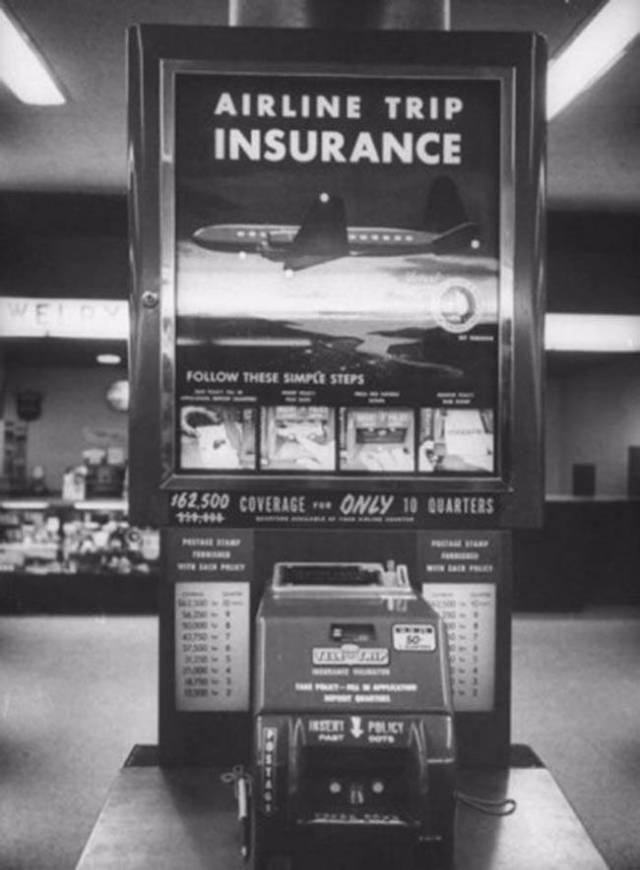
Ten quarters bought more than snacks at the terminal—at least according to the bold promise on this “Airline Trip Insurance” vending machine. The display pairs a streamlined passenger plane with big, reassuring lettering, turning a moment of pre-flight anticipation into a quick transaction. It’s an inventions-era snapshot of how air travel was marketed to the public: modern, efficient, and packaged for convenience.
Centered beneath the airplane graphic, simple step-by-step panels explain how to get a policy, as if buying peace of mind should be as easy as dropping coins into a slot. The machine advertises a hefty “coverage” figure and emphasizes speed, suggesting an age when automated services were a novelty and self-serve technology carried a whiff of the future. Even the layout—prominent instructions, price callout, and a mechanical payout area—reads like early fintech, designed to make insurance feel tangible and immediate.
Airline trip insurance like this reflects a shifting travel culture, when flying was exciting but still carried enough perceived risk to make last-minute coverage a selling point. The title’s disbelief—“Only 10 quarters for flight insurance?”—captures the historical tension between bargain pricing and the weighty subject of accidents, liability, and reassurance. For readers interested in vintage aviation, travel history, and forgotten consumer inventions, this photo is a compact reminder that the airport once offered protection at the drop of a coin.