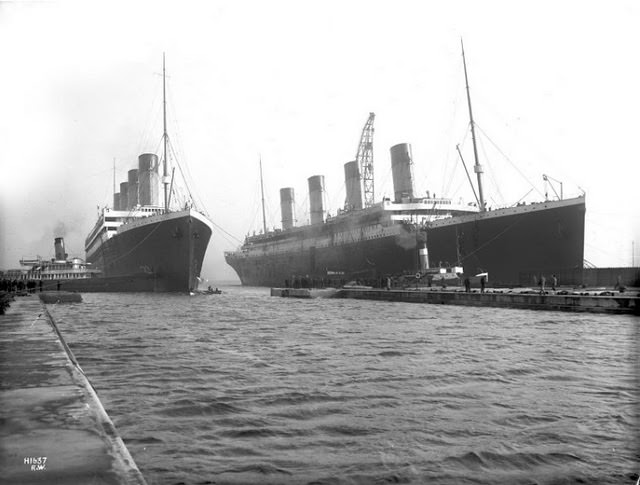
Two colossal ocean liners sit side by side along a busy quay, their dark hulls rising like cliffs above the water while cranes and rigging trace a web of industry overhead. Smoke drifts from tall funnels, and small craft in the foreground emphasize the scale that made these ships symbols of modern ambition. The scene instantly evokes the era when shipyards, docks, and engineering workshops worked in concert to turn steel plates and rivets into floating cities.
Behind the popular legend of an “unsinkable” ship lies a story of construction techniques and practical inventions that reshaped maritime travel. Details visible here—multiple funnels, towering masts, and the hard geometry of a liner’s bow—hint at the complex systems hidden within: watertight compartments, powerful propulsion, electrical lighting, and the logistics needed to outfit interiors worthy of first-class luxury. For readers searching for Titanic construction history, this kind of dockside view offers a grounded reminder that fame began long before any maiden voyage, in the noise and precision of the shipbuilding process.
Along the waterfront, the calm surface of the harbor contrasts with the restless energy implied by dock workers, tenders, and the infrastructure built to service ships of unprecedented size. It’s a moment that speaks to the confidence of the early 20th century, when industrial design promised safer, faster, more comfortable crossings—and public fascination turned engineering into headline news. Use this post to explore how the Titanic’s rise to fame was fueled not only by spectacle, but by the very real innovations and labor that made such a leviathan possible.