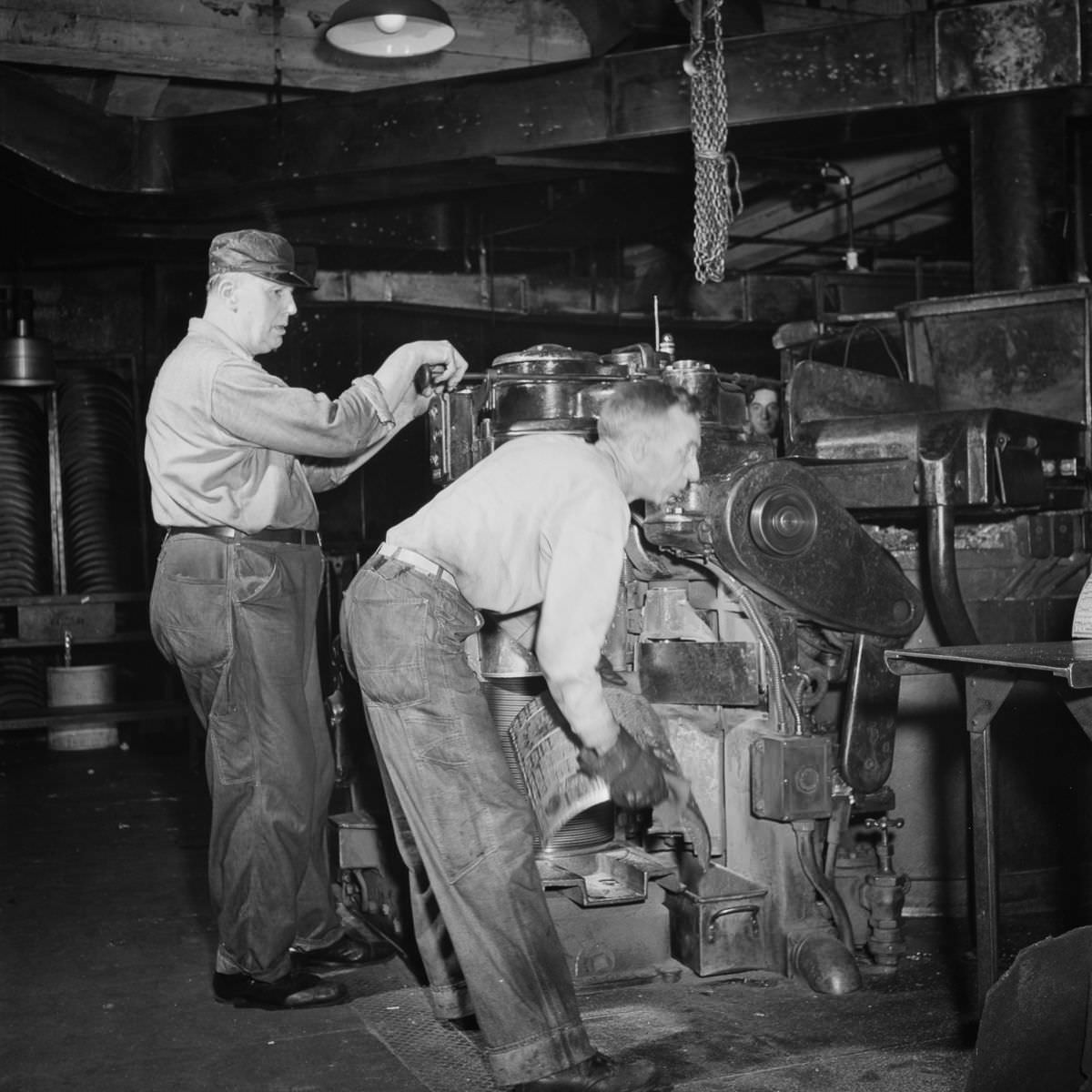
Inside a dim, industrial pressroom, two workers focus on an Autoplate machine built for one job: turning completed linotype slugs into curved printing plates. The men’s sleeves are rolled, their stances practical and practiced, surrounded by heavy metal housings, belts, and controls that hint at the heat and force involved. Overhead lamps and hanging chains frame a workspace where precision mattered as much as strength.
The Autoplate process sits at a crucial midpoint in the life of a printed page, bridging typesetting and the roaring press. Linotype slugs—solid lines of cast type—could be assembled into a forme, then used to create a plate shaped to fit the cylinder of a rotary printing press. That curvature, suggested here by the equipment’s rounded parts and the handling of a flexible-looking plate, was essential for fast, high-volume newspaper and commercial printing.
For readers drawn to the history of inventions and the evolution of publishing technology, this photograph offers a grounded look at the machinery behind mass communication. Long before digital layout and offset printing became the norm, plate casting and linotype systems helped speed news and advertising into the world with remarkable consistency. The scene is a reminder that every headline once relied on skilled hands, molten metal, and machines like the Autoplate working in concert.