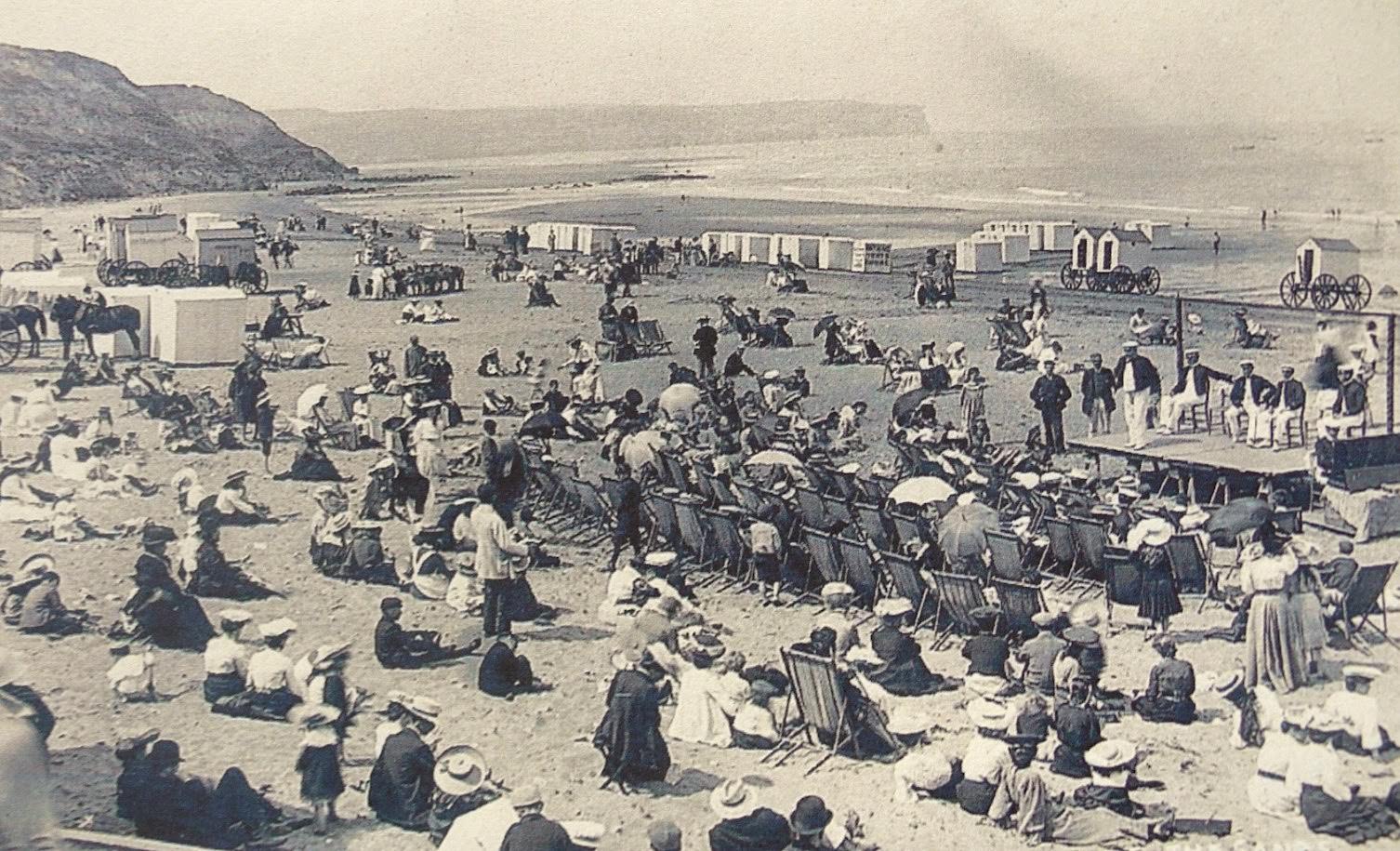
A bustling seaside crowd spreads across the sand, with deck chairs clustered in tight rows and spectators gathered around a small raised platform where a few figures seem to be addressing the beachgoers. Farther back, squat little hut-like carriages sit near the shoreline, their large spoked wheels and boxy shapes hinting at the peculiar engineering that once made “going for a swim” a carefully managed affair. The hazy horizon, distant cliffs, and orderly scatter of people at the water’s edge evoke the atmosphere of a popular resort day, long before modern swimwear and open changing rooms became the norm.
Bathing machines—those wheeled changing cabins—were designed to solve a social problem as much as a practical one: how to let people enjoy sea bathing while preserving modesty. Rolled toward the surf (often by attendants or horses), they offered privacy to change and, in many cases, a discreet exit closer to deeper water. In scenes like this, you can almost feel the choreography of the Victorian beach: promenading, watching, waiting, and only then slipping into the sea under the rules of the era.
Going Swimming On Wheels gathers more than 50 historic photos of bathing machines and the beach culture that grew around them, from crowded holiday sands to the quirky vehicles themselves. Alongside the charm, the gallery reveals how technology, etiquette, and leisure combined to shape the early seaside experience. Browse for the details—wheels half-buried in sand, rows of portable huts, and the human pageantry of a day at the shore—captured in images that make this forgotten invention feel unexpectedly vivid.