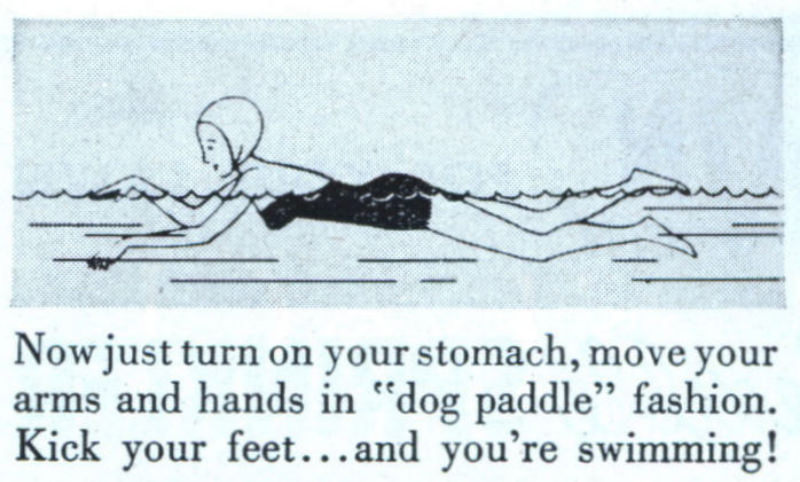
Across the page, a simple line drawing of a swimmer gliding face-down through calm water is paired with upbeat instruction: turn onto your stomach, move your arms in a “dog paddle,” kick your feet—and you’re swimming. That friendly, almost comic-strip clarity fits perfectly with the promise behind the Ever-Float safety swimsuit, a 1970s-era invention aimed at making time in the water feel less intimidating. Instead of glamorizing beach fashion, the design is marketed as a confidence tool, turning basic motion into an achievable first step.
Reading the ad copy today, you can hear the era’s faith in practical solutions: if you can float and move, you can participate. The emphasis on “dog paddle” hints at a target audience of beginners, children, or nervous adults—anyone who wanted reassurance that swimming didn’t have to start with formal lessons or strong strokes. In that sense, the Ever-Float concept sits at the intersection of safety gear and everyday apparel, part of a broader 1970s trend toward consumer-friendly inventions that promised independence with minimal fuss.
For collectors of vintage advertisements and fans of retro inventions, this historical photo offers more than nostalgia; it’s a snapshot of how water safety was sold through simplicity and encouragement. The Ever-Float safety swimsuit stands out as a “revolutionary swimsuit” less for its style than for its message: buoyancy plus basic movement equals freedom in the pool or at the shore. As you explore the post, notice how the visuals and wording work together—an early lesson in persuasive design where reassurance, not performance, is the product.