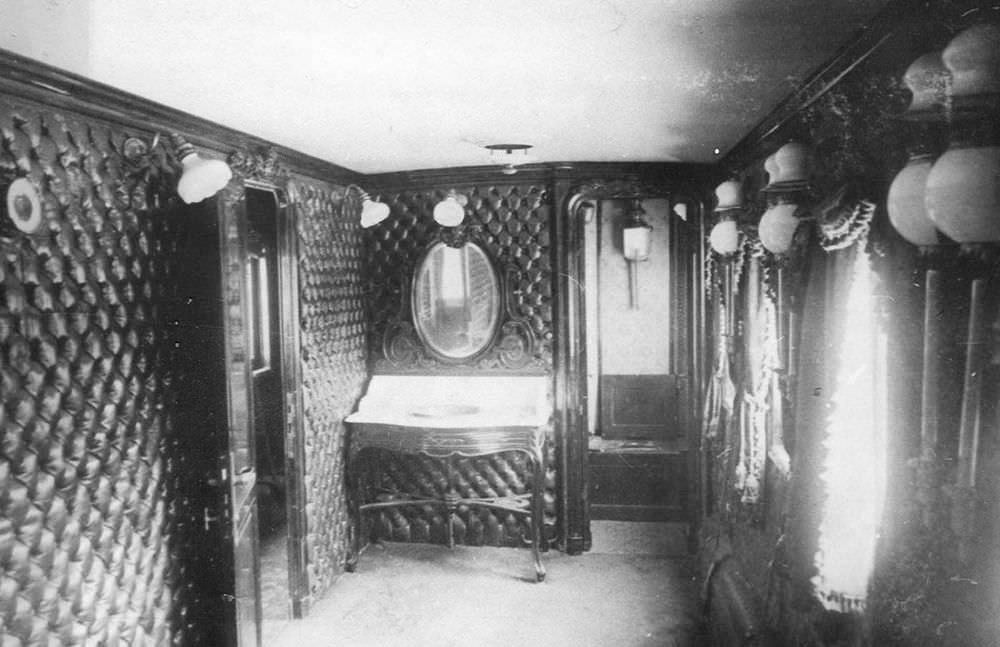
Step inside this carriage interior and the first impression is one of deliberate comfort: deeply tufted wall upholstery, polished woodwork, and a neat dressing table crowned by an oval mirror. The arrangement suggests a space designed not merely for transport, but for composure—somewhere a traveler could tidy up, check their appearance, and settle into the rhythm of the journey. Soft, globe-like lamps punctuate the corridor, turning a functional passageway into something approaching a private room.
Along the right side, curtained windows hint at a moving view beyond the glass, while the thick padding and drapery would have helped muffle sound and smooth the sensory edges of travel. Doors open to adjoining compartments, implying a carefully planned layout that balanced privacy with access—an interior architecture of travel where every surface and fitting served a purpose. Even without passengers present, the carriage feels “occupied” by the expectations of long trips, formal dress, and the etiquette of shared transit.
For readers drawn to the history of inventions and everyday technology, this photo is a quiet reminder that progress often arrived wrapped in luxury and craft. Early carriage design—especially in well-appointed rolling stock—combined lighting, ventilation, textiles, and joinery to create an experience as much as a vehicle. As an interior view of one of the carriages, the scene offers a compelling window into how designers translated motion into domestic comfort, shaping the way people imagined modern travel.