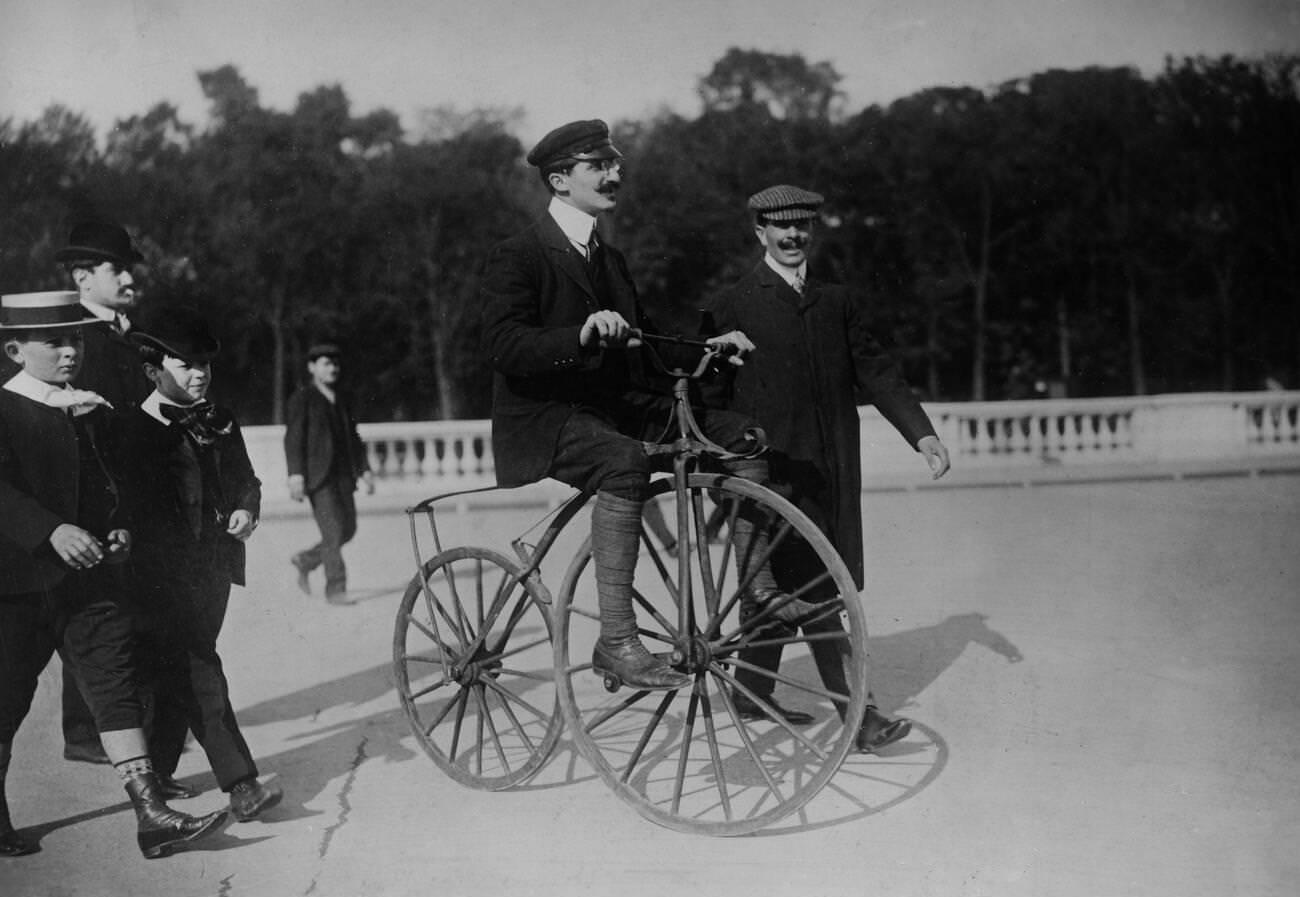
A tall rider perches high above the pavement on a penny-farthing bicycle, the huge front wheel and tiny trailing wheel turning the street into a stage. Dressed in a dark suit and cap, he grips the narrow handlebars with the calm confidence of someone used to balancing on a machine that offers little forgiveness. Around him, onlookers in early 20th-century attire drift alongside, their attention drawn to the spectacle of this high-wheeled invention.
The scene hints at a transitional moment in cycling history, when older designs still appeared in public even as safer, chain-driven bicycles had become common. The penny farthing’s direct-drive front wheel promised speed through sheer diameter, yet demanded skill, steady nerves, and a willingness to risk a sudden forward tumble. Details like the spoked wheels, upright posture, and elevated saddle underline why these bicycles became icons of Victorian and Edwardian-era ingenuity.
As a historical photo labeled “Penny farthing bicycle, 1906,” this image offers more than novelty; it captures the social theater of technology in motion. The open walkway, low balustrade, and distant trees create a public backdrop where innovation could be admired, questioned, or simply enjoyed as entertainment. For anyone exploring cycling history, early transportation, or the story of inventions that shaped everyday life, this photograph brings the era’s daring design and public curiosity into sharp focus.