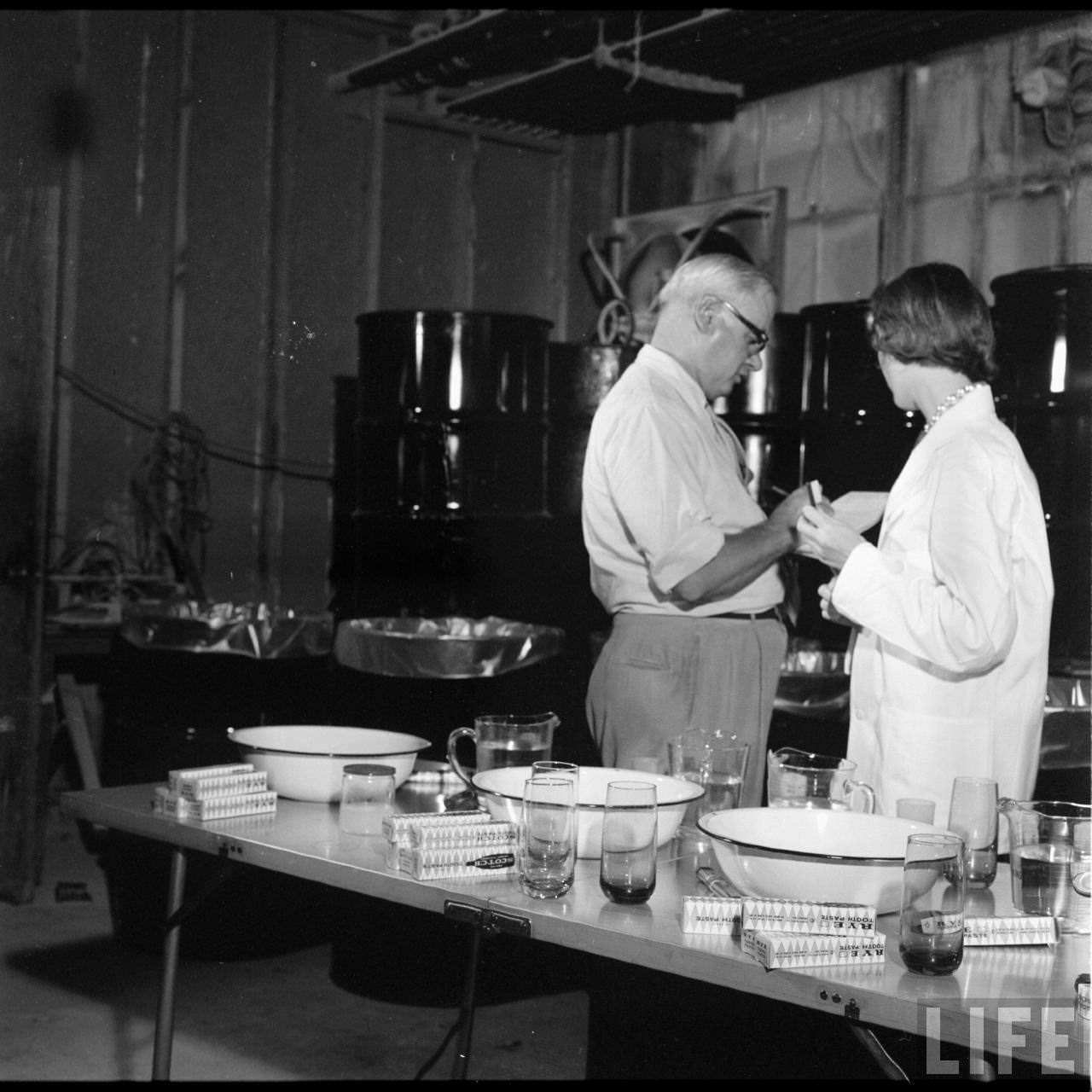
Somewhere between a laboratory bench and a back-room taste test, two researchers in white coats lean over notes while a long table is lined with glasses, pitchers, and enamel bowls. Boxes of toothpaste sit among the drinkware, turning an ordinary dental product into something that looks suspiciously like a sampling session. The industrial setting behind them—barrels, exposed beams, and improvised work surfaces—adds to the feeling that postwar innovation could happen almost anywhere, as long as there were willing hands and a clipboard.
Whiskey-flavored toothpaste sounds like a punchline today, but it fits neatly into the mid-century obsession with novelty, convenience, and “modern” solutions to everyday routines. If mint was too predictable, why not borrow the aroma of the bar to make brushing feel grown-up, fashionable, or simply more exciting? Marketing in the 1950s often leaned on bold flavors and big promises, and inventions like this reveal how far companies would go to make a product stand out on a crowded shelf.
What lingers in photos like this isn’t just the gimmick, but the earnestness—the careful measuring, the quiet confidence that the next clever twist could change habits nationwide. For readers hunting vintage oddities, forgotten 1950s inventions, or the strange history of toothpaste flavors, this scene offers a vivid snapshot of experimentation at the edge of good taste. It’s a reminder that the past was full of serious people testing ridiculous ideas, one glass and one tube at a time.