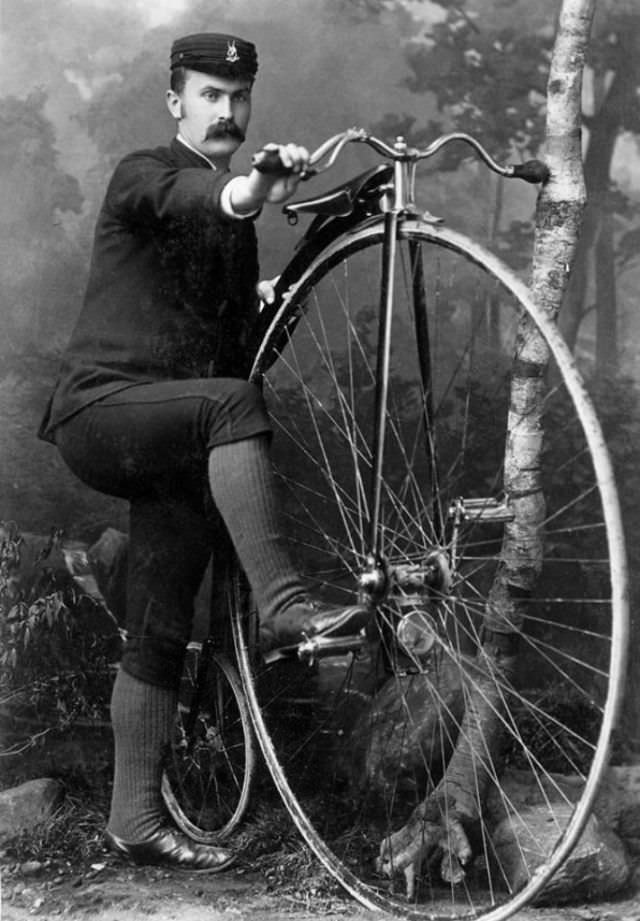
Balanced high above the ground, a uniformed rider poses with the unmistakable penny-farthing—its towering front wheel, delicate spokes, and compact rear wheel turning a simple bicycle into a daring feat of engineering. The studio-like backdrop and carefully staged stance hint at pride as much as practicality, capturing a moment when cycling was both spectacle and modern sport. Details like the curved handlebars and metal fittings draw the eye to the inventiveness that defined early bicycle design.
During the penny-farthing era, speed came from scale: a larger front wheel meant more distance covered per pedal turn, even as it demanded skill, strength, and nerve. Riders learned to mount, steer, and brake a machine that offered little forgiveness, and photographs like this preserve the posture of confidence that went with the challenge. It’s a reminder that “inventions” weren’t only ideas on paper—they were lived experiences, tested on roads and in parks by people willing to try something new.
For today’s vintage cycling enthusiasts, these timeless images help trace the path from high-wheel bicycles to the safer designs that soon reshaped everyday transportation. The penny-farthing remains an icon of Victorian-era innovation, blending craftsmanship with an almost theatrical sense of risk. Explore this post for a closer look at historical bicycle photography that celebrates early cycling culture, mechanical ingenuity, and the unmistakable silhouette of the high wheel.