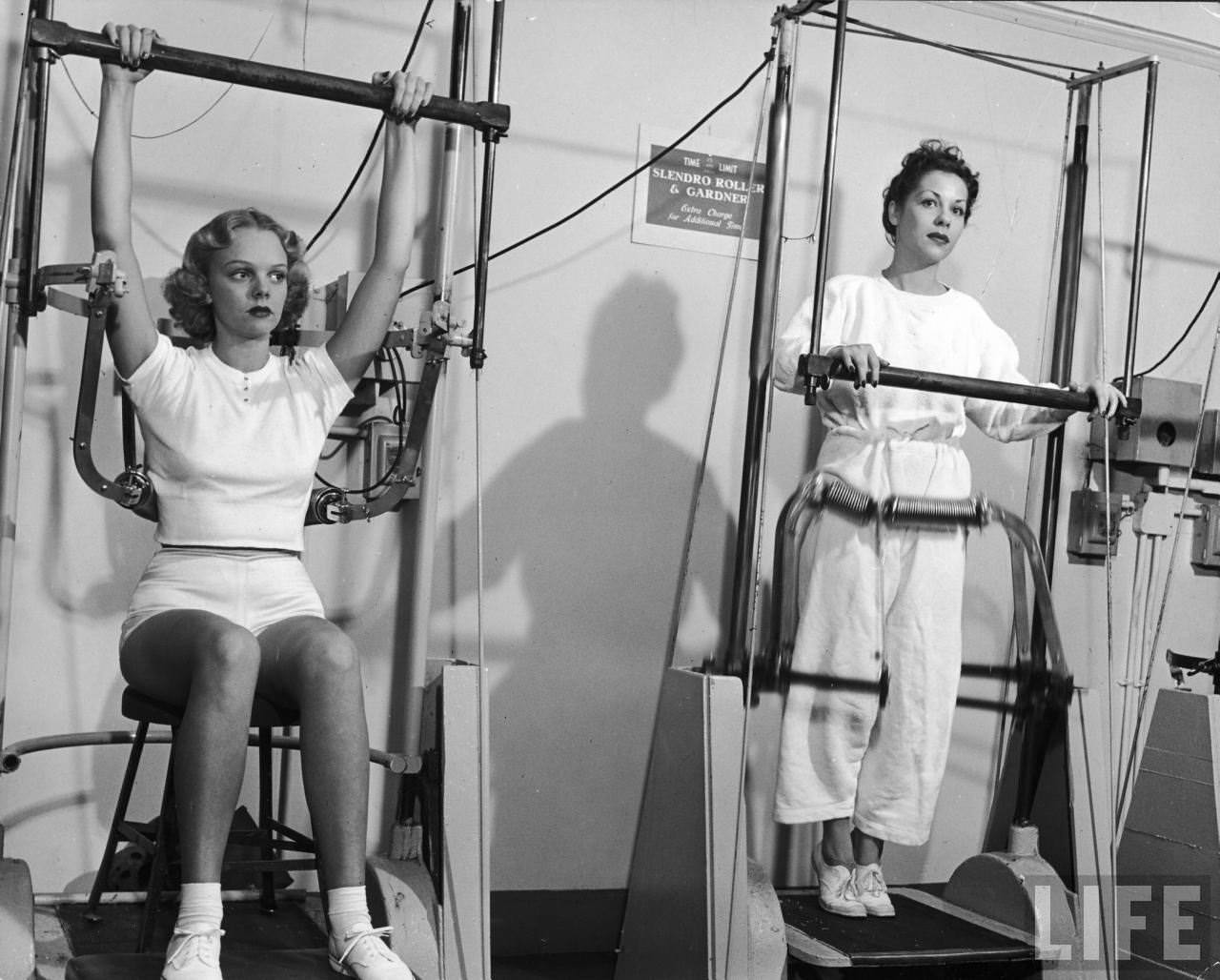
Between steel frames, belts, and rollers, a slenderizing salon turns body-shaping into a kind of mechanical ritual. Model Pat Ogden, positioned on the left, grips an overhead bar while a “Back Ring Roller” is meant to target the back from the waist up, its purpose spelled out in the very language of the era: reduce, smooth, slenderize. The stark studio lighting and utilitarian equipment lend the scene a clinical, almost laboratory feel, as if modern technology could be calibrated to sculpt an ideal silhouette.
On the right, Ann Miller stands on a platform using a modified Slendro Massager intended to slim the hips, her hands steady on a horizontal bar as the device blurs with motion. Nearby signage hints at branded treatments and timed sessions, suggesting a commercialized routine where promise and procedure go hand in hand. Even without a visible location or date, the setting evokes a mid-century fascination with gadgets that translated fitness and beauty into engineered solutions.
What makes this historical photo so compelling is how it sits at the crossroads of invention, advertising, and changing expectations around women’s bodies. These machines speak to an optimistic belief that innovation could streamline everyday life—including the most personal anxieties about shape and appearance. For readers searching for vintage beauty technology, old-school fitness equipment, or the history of slimming salons, the image offers a vivid snapshot of how “modern” once looked: humming, bolted together, and sold as progress.