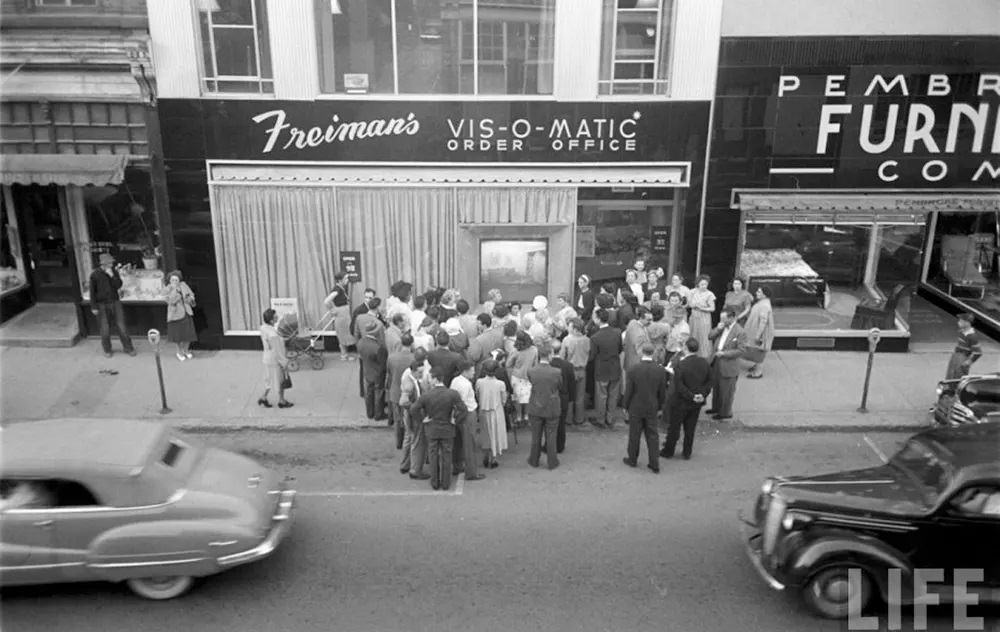
Crowds gather on a busy city sidewalk outside Freiman’s “VIS-O-MATIC” Order Office, drawn to what looks like a storefront from the future. Instead of browsing aisles, customers cluster around a large viewing screen and a counter, watching as products are displayed for selection. The scene feels familiar to anyone who’s ever filled an online cart—except here the “interface” is a physical display window and the excitement is shared in public.
Long before the internet turned shopping into a private click, retailers experimented with screen-based ordering systems that promised speed, convenience, and endless choice. The signage and the spectacle suggest a carefully staged demonstration: people lean in, wait their turn, and try to understand how buying can happen without touching the merchandise. It’s an early chapter in the history of inventions that reimagined retail—tele-shopping before television shopping, e-commerce before the “e.”
Behind the novelty lies a simple promise that still powers online shopping today: choose from a catalog on a screen, place an order, and let the company ship it to you. The street traffic and onlookers remind us that innovation often arrives first as a public curiosity, then quietly becomes routine. For readers interested in pre-internet technology, retail history, and the roots of modern e-commerce, this photo is a striking glimpse of how “online” shopping was imagined decades ago.