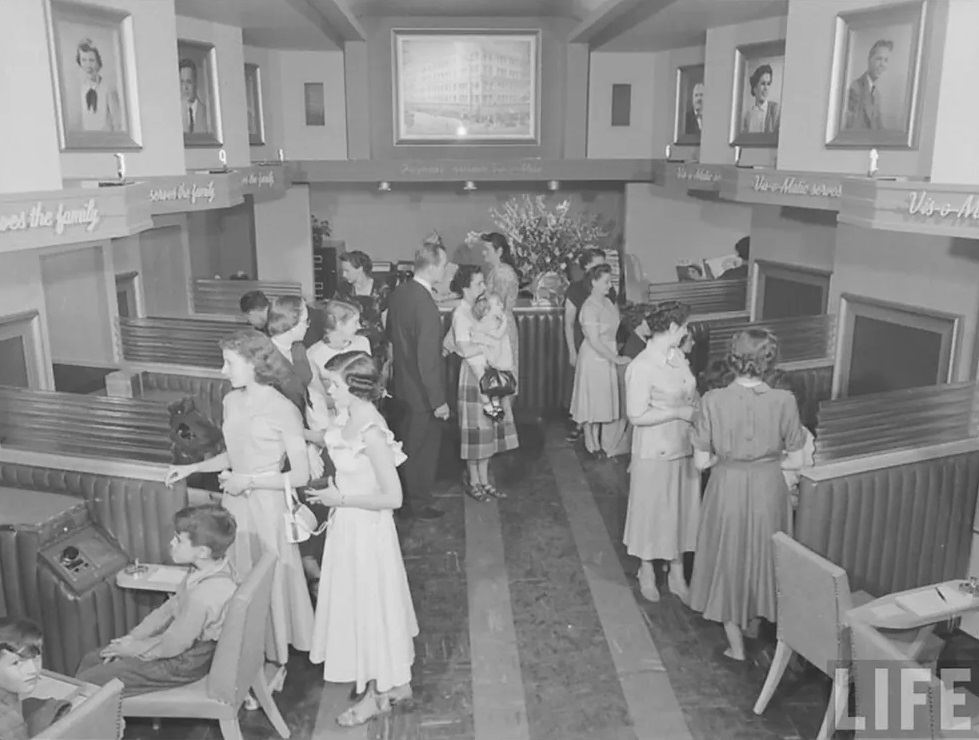
Long before the web made “add to cart” second nature, retailers experimented with a pre-internet online shopping store where customers browsed merchandise through screens set into cozy booth-like stations. In the photo, families and couples cluster around the terminals, leaning in with the curiosity of first-time users, while attendants and fellow shoppers move through the narrow aisles as if this were a new kind of department store. Even the room’s staged calm—soft lighting, tidy partitions, and a sense of orderly traffic—suggests a carefully designed introduction to tomorrow’s way of buying.
Instead of walking racks and counters, shoppers here appear to interact with a catalog presented electronically, selecting goods from a display and placing an order on the spot. The promise was simple but powerful: make a choice at the screen, submit it, and let the company ship the purchase to your home, cutting down on carrying parcels and broadening what a store could offer beyond what fit on its shelves. Seen today, the setup reads like an early blueprint for e-commerce, blending the comfort of in-person shopping with the reach of remote fulfillment.
What makes this scene so compelling is how familiar it feels despite the retro styling—shared screens, guided navigation, and a social buzz around a new invention. The technology may be bulky and the interface unseen, but the behavior is instantly recognizable: comparison, decision, and the thrill of ordering something that isn’t physically in your hands yet. For readers interested in the history of online shopping, retail innovation, and early consumer technology, this photograph captures a pivotal step on the long road to modern e-commerce.