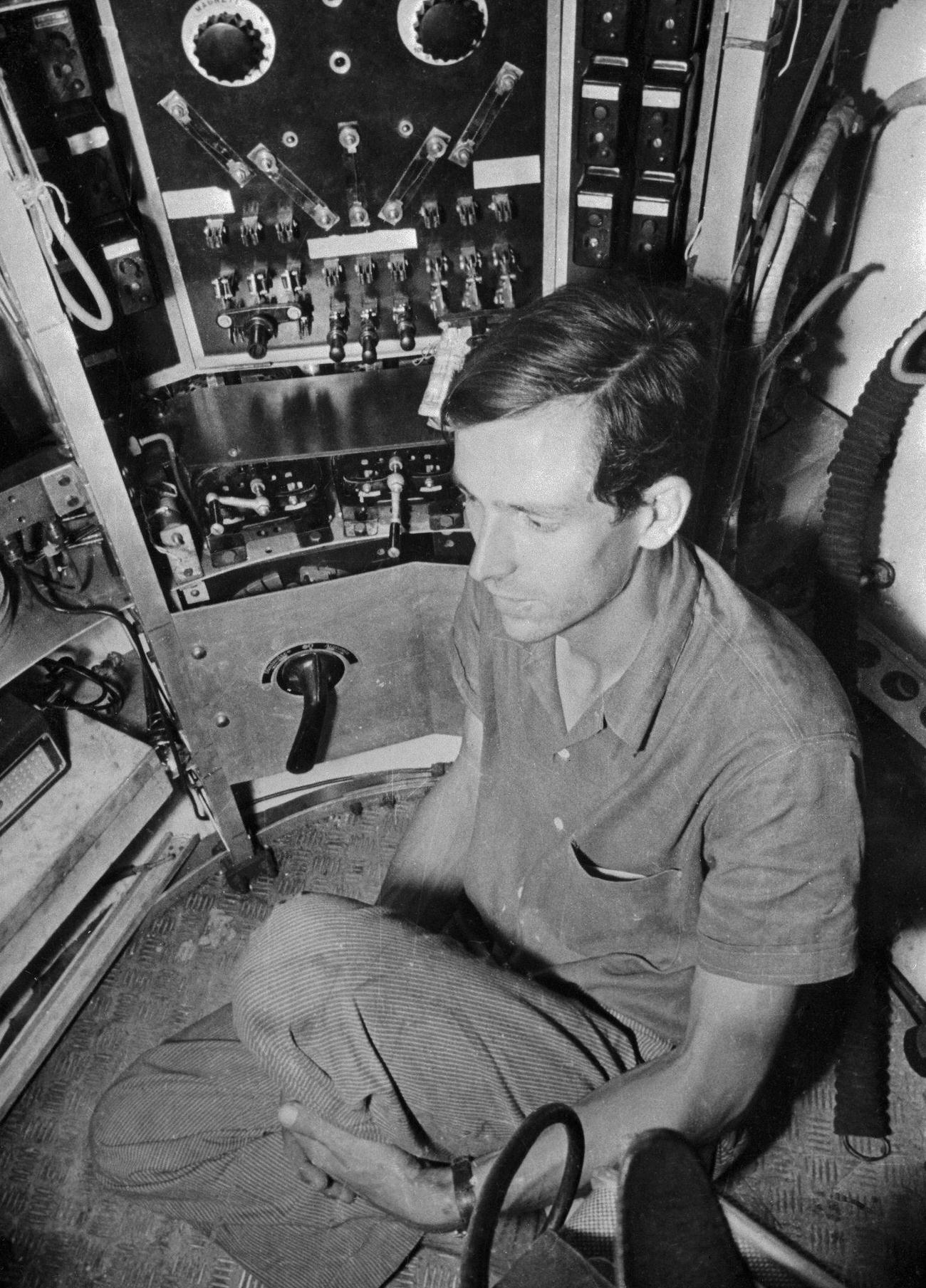
Cramped among switch banks, gauges, and wiring, Jacques Piccard sits inside the bathysphere Trieste with the focused calm of a man trusting his life to engineering. The tight interior reads like a mechanical cockpit: heavy levers within reach, instrument dials clustered overhead, and rugged surfaces built for work rather than comfort. In this close view, the human figure and the machine share the frame as equals, a reminder that deep-sea exploration has always been as much about patience and procedure as daring.
Off the Isle of Ponza, Trieste was being pushed toward a world record attempt, and the photograph hints at what that meant in practical terms—hours spent monitoring systems in a steel enclosure while the ocean pressed in. Piccard’s posture and the dense control panel suggest a disciplined routine of checks, adjustments, and watchfulness, where small readings could matter enormously. For readers interested in the history of inventions, this is a striking example of mid-century innovation aimed at the least forgiving environment on Earth.
Collectors and researchers of underwater exploration history will find plenty to linger over: the analog instrumentation, the utilitarian layout, and the unmistakable atmosphere of experimental technology. The image pairs perfectly with topics like Trieste bathysphere design, record-setting dives, and the broader story of how oceanographic ambition reshaped engineering. As a historical photo for a WordPress post, it offers both a compelling portrait and a vivid document of deep-sea technology at the edge of its era.